How Much Does Sewer Line Repair Cost in Suffolk County, NY? 2026 Guide
Last updated: 2026-06-24
Reviewed by: Bernie Colletti, Colletti Sewer & Drain
Most Suffolk County, NY homeowners pay $1,500 to $3,500 for a spot sewer line repair in 2026, with trenchless lining $4,000 to $8,500 and full excavation replacement up to $15,000+ depending on depth, length, and what's above the line.
If you're dealing with recurring backups, root intrusion, slow drains throughout the house, sewage odors, or a failed sewer camera inspection, understanding the likely repair cost before calling a contractor can help you avoid surprises. In Suffolk County, pricing varies significantly depending on how deep the pipe sits, how much of the line is damaged, whether the pipe runs beneath a driveway or patio, and whether a targeted repair or full replacement makes more financial sense. This guide breaks down the real-world costs Long Island homeowners are seeing in 2026 and explains how to evaluate repair options fairly.
What is sewer line repair?
In brief: Sewer line repair fixes a damaged sewer lateral so wastewater can safely flow from the home to a public sewer connection or private wastewater system.
Sewer line repair is the targeted fix of a damaged section of a residential or commercial sewer lateral, the pipe that carries wastewater from the building to the public sewer main or a private cesspool. Common methods include spot excavation and replacement, trenchless pipe lining (CIPP), pipe bursting, or full lateral replacement.
A sewer lateral can fail for many reasons. Tree roots can enter joints and cracks. Older clay or cast-iron pipe can deteriorate. Ground movement can create offsets or collapses. Grease buildup and recurring blockages can accelerate damage over time.
The repair approach depends on what a camera inspection finds. In some homes, a single broken section can be excavated and replaced. In others, multiple failures throughout the line make trenchless rehabilitation or complete replacement the better investment.
Homeowners experiencing recurring backups should not assume the problem is simply a clog. A professional camera inspection often reveals structural pipe issues that cleaning alone cannot solve.
If you're already experiencing active backups or sewage overflow, our emergency sewer and drain repair team can evaluate the situation quickly and determine whether repair or replacement is required.
How much does sewer line repair cost in Suffolk County?
In brief: Most Suffolk County homeowners spend between $1,500 and $3,500 for a localized sewer repair, while trenchless and full replacement projects can range from $4,000 to more than $15,000 depending on conditions.
Typical sewer line repair cost in Suffolk County, NY ranges from $1,500 to $15,000+, with the final price driven primarily by repair method, excavation requirements, pipe length, and site conditions.
Many national cost-estimator websites provide broad averages, but they rarely account for Long Island-specific factors such as residential lot layouts, shallow versus deep sewer laterals, mature street trees, driveway crossings, and local permit requirements. Those factors can dramatically affect the final project cost.
Sewer Line Repair Cost by Method (2026)
| Method | Typical 2026 Cost | When It Works Best | Yard Disruption |
|---|---|---|---|
| Spot excavation repair | $1,500 to $3,500 | Single break, isolated collapse, localized root intrusion | Low to moderate |
| Trenchless pipe lining (CIPP) | $4,000 to $8,500 | Structurally sound pipe with cracks, roots, or leaks | Very low |
| Pipe bursting | $5,500 to $11,000 | Existing line needs replacement but trenchless access is possible | Low |
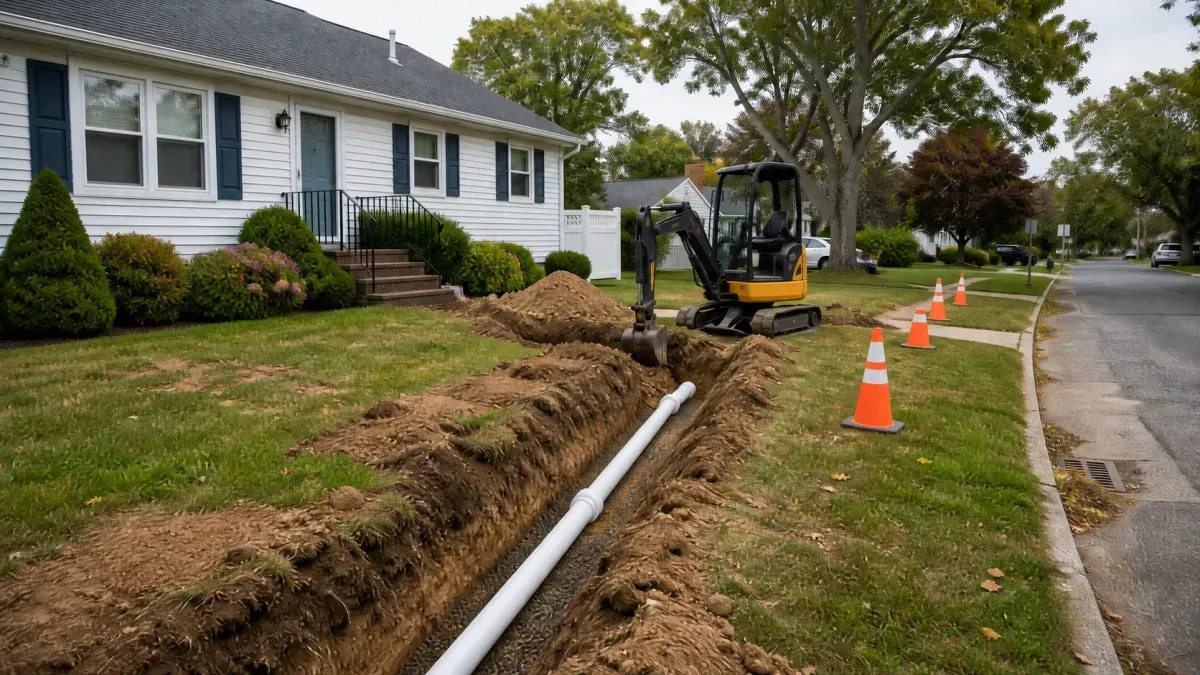
| Full excavation and replacement | $4,500 to $15,000+ | Extensive damage, multiple failures, collapsed pipe | High |
Example Suffolk County Scenarios
Scenario 1: Single Root Intrusion Near Front Yard
A homeowner in Islip experiences recurring backups. Camera inspection reveals one root intrusion approximately 15 feet from the foundation. A localized excavation and replacement solves the issue.
Typical cost: $1,500 to $3,000
Scenario 2: Cracked Clay Sewer Lateral
A Babylon homeowner discovers several cracks throughout an aging clay sewer line. The pipe remains structurally intact enough for trenchless lining.
Typical cost: $4,500 to $8,000
Scenario 3: Collapsed Pipe Under Driveway
A Brookhaven property has a collapsed section beneath a concrete driveway. Excavation, pipe replacement, and surface restoration are required.
Typical cost: $6,000 to $12,000+
Scenario 4: Multiple Failures Along Entire Lateral
An older Suffolk County home experiences repeated backups from several damaged sections. Full replacement becomes more economical than repeated spot repairs.
Typical cost: $8,000 to $15,000+
What's Included in Most Sewer Repair Quotes?
A professional sewer repair estimate may include:
- Camera inspection
- Diagnostic locating
- Excavation
- Pipe replacement materials
- Labor
- Backfill and restoration
- Permit coordination when required
- Final testing and verification
Before approving any project, homeowners should request a detailed written estimate rather than a single lump-sum number.
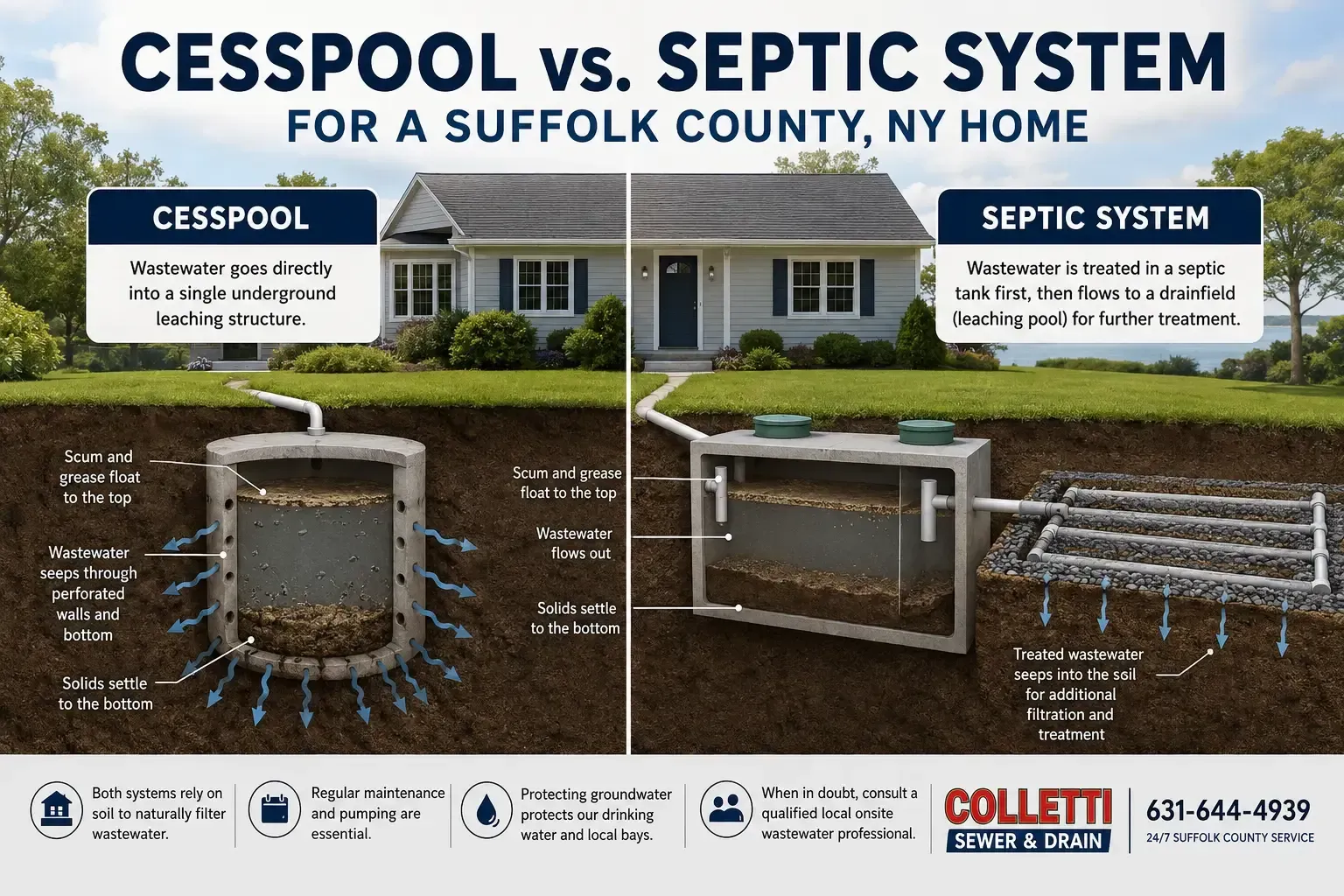
For larger failures involving aging wastewater systems, some homeowners also schedule an evaluation of their existing cesspool pumping and cleaning needs to ensure the entire system is functioning properly.
What affects sewer line repair cost in Suffolk County?
In brief: Depth, pipe length, driveway crossings, tree roots, restoration work, and permit requirements are the biggest cost drivers for Long Island sewer repair projects.
The same sewer problem can cost $2,000 at one property and $10,000 at another because site conditions vary dramatically.
1. Depth of the Sewer Line
Shallow sewer laterals are generally less expensive to repair because excavation is simpler and requires less labor. Deep sewer lines often require larger excavation areas, additional safety measures, and more time on site.
2. Length of Pipe Affected
Repairing a five-foot section costs substantially less than replacing fifty feet of sewer pipe. Longer runs require more labor, materials, and restoration work.
3. Driveways, Walkways, and Patios
When sewer lines run beneath hard surfaces, additional demolition and restoration costs often apply. Concrete replacement, paver restoration, and asphalt repair can significantly increase project pricing.
4. Tree Root Intrusion
Root intrusion remains one of the most common causes of sewer line failure on Long Island. Mature neighborhood trees can penetrate aging pipe joints and eventually cause blockages or structural damage.
"One of the biggest cost factors we see across Suffolk County is where the damaged section sits. A shallow repair in a front yard is usually much simpler than a deep repair running beneath a backyard patio or mature tree roots. The location of the break often matters as much as the break itself."
Bernie Colletti
5. Soil Conditions
Compared with many regions that have heavy clay soils, much of Long Island's sandy soil can make excavation easier and faster. However, groundwater conditions and utility congestion can still affect labor requirements.
6. Permit and Inspection Requirements
Depending on the municipality and scope of work, permits or inspections may be required before repairs begin. Requirements may vary among local jurisdictions including Babylon, Islip, Brookhaven, and other Suffolk County municipalities.
7. Camera Inspection and Diagnostic Work
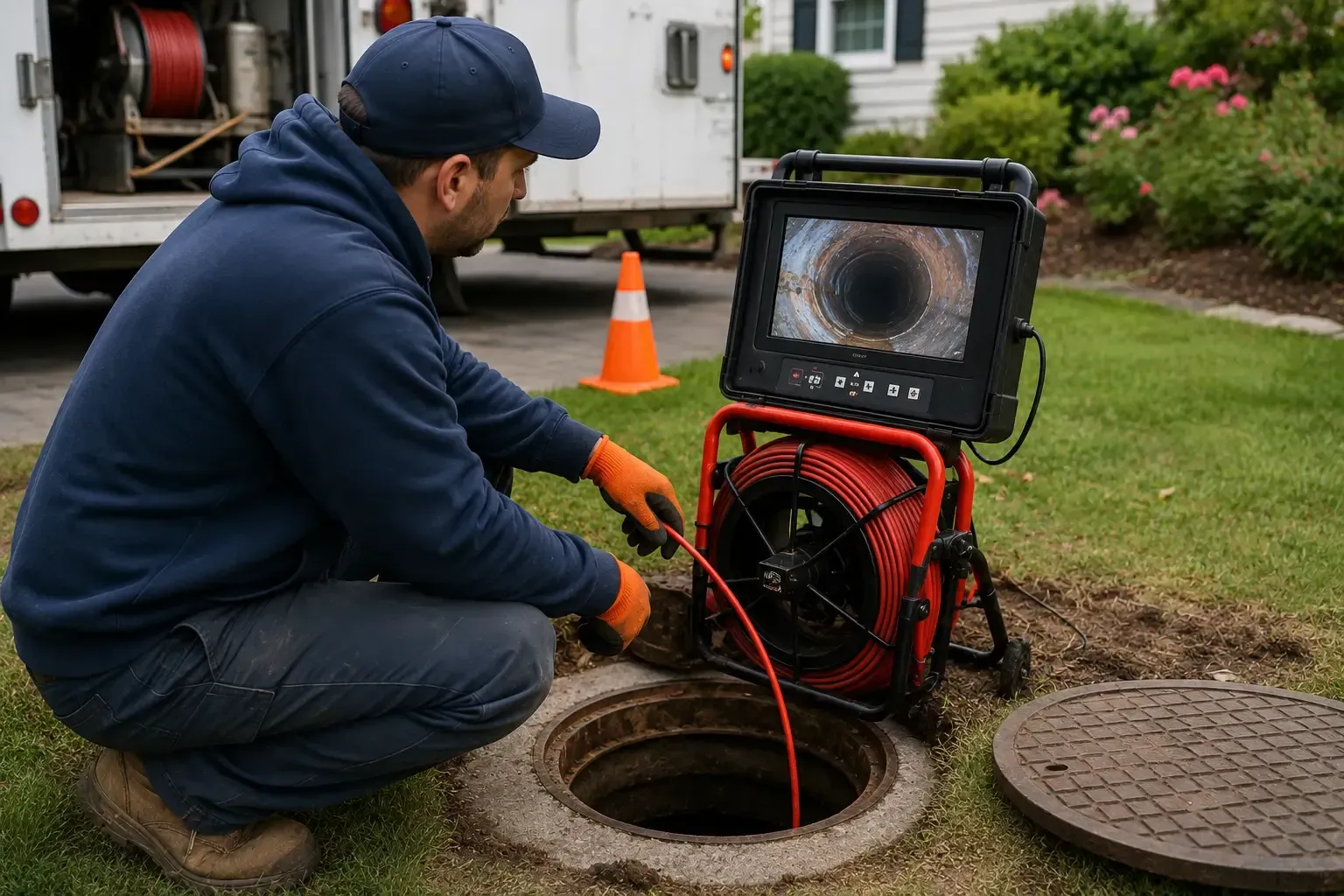
Most reputable contractors perform camera inspections before recommending repair or replacement. While inspection costs may be separate in some cases, they often prevent unnecessary excavation and help identify the most cost-effective solution.
Sewer Repair Cost Drivers
| Factor | Typical Adder |
|---|---|
| Deep sewer line excavation | $500 to $3,000+ |
| Longer pipe run | $50 to $200+ per foot |
| Driveway or sidewalk restoration | $1,000 to $5,000+ |
| Significant tree root removal | $300 to $2,000+ |
| Permit and inspection requirements | $100 to $1,000+ |
| Camera inspection and locating | $250 to $600 |
Why Local Evaluation Matters
Online calculators can provide rough guidance, but they cannot determine the actual depth, pipe condition, root involvement, or accessibility of your sewer lateral.
That is why most experienced contractors recommend an on-site inspection before quoting a repair.
Homeowners who want a second opinion can learn more about our company through the Colletti Sewer & Drain team page and review completed local projects and customer experiences on our customer reviews page.
Spot repair vs full replacement: how to decide
In brief: A spot repair is often the right choice when damage is isolated. Full replacement usually makes more financial sense when multiple sections of the sewer lateral are failing.
One of the most important decisions homeowners face is whether to repair a single damaged section or replace the entire sewer line.
A camera inspection provides the answer. If the rest of the pipe remains structurally sound, a localized repair can often restore reliable performance for years. However, if the line contains multiple cracks, offsets, root intrusions, or deteriorated pipe material, repeated repairs can become more expensive than replacement.
Spot Repair Usually Makes Sense When:
- Damage is limited to one area
- The remainder of the pipe is in good condition
- The sewer line is relatively modern
- Camera inspection shows no widespread deterioration
- Backups began recently
Full Replacement Usually Makes Sense When:
- Multiple damaged sections exist
- Pipe material is at the end of its service life
- Repeated backups continue despite previous repairs
- The line has experienced partial collapse
- Root intrusion occurs throughout the run
"If a camera inspection shows one isolated failure and the rest of the line looks healthy, a spot repair is usually the smart choice. But when we're seeing cracks, root intrusion, and deterioration throughout the lateral, replacement often saves the homeowner money over the next five years because they're not paying for repeated excavations."
Bernie Colletti
Simple Decision Tree
One break + otherwise healthy pipe?
→ Consider spot repair.
Several defects throughout the line?
→ Evaluate trenchless rehabilitation or replacement.
Collapsed sections in multiple locations?
→ Full replacement is usually the most cost-effective long-term solution.
For homeowners facing repeated sewer backups, it is often worth comparing both repair and replacement estimates before making a decision.
Trenchless sewer repair on Long Island: when it makes sense
In brief: Trenchless repair can reduce yard, driveway, and landscaping disruption while restoring the structural integrity of an existing sewer line.
Most Suffolk County trenchless sewer repairs cost between $4,000 and $8,500, depending on line length and pipe condition.
Trenchless methods have become increasingly popular because they minimize excavation.
Instead of digging a continuous trench across the property, contractors access the pipe through limited entry points and rehabilitate or replace the line from within.
Pipe Lining (CIPP)
Cured-in-place pipe lining creates a new pipe inside the existing pipe.
This method works best when:
- The pipe still holds its shape
- Cracks and leaks are present
- Root intrusion has occurred
- Excavation would be disruptive
Benefits include:
- Minimal landscaping damage
- Faster completion
- Reduced driveway disruption
- Long service life
Pipe Bursting
Pipe bursting replaces the existing line by pulling a new pipe through the old one while simultaneously fracturing the original pipe.
This method is often appropriate when:
- The pipe requires complete replacement
- Trenchless access is available
- Homeowners want to avoid extensive excavation
When Trenchless Is Not Appropriate
Trenchless methods are not always possible.
Full excavation may still be required when:
- The pipe has completely collapsed
- Severe offsets exist
- Access points cannot be established
- Utility conflicts are present
Compared with national aggregator sites that rely on broad averages, a local inspection can determine whether trenchless repair is actually feasible on your specific property.
For homeowners facing active sewage backups, immediate evaluation through our 24/7 sewer and drain repair service can prevent further property damage.
How long does sewer line repair take?
In brief: Most spot repairs are completed within one day, trenchless repairs within one to two days, and full excavated replacements within two to five days.
Project duration depends on repair method, weather, site access, and restoration requirements.
Timeline by Repair Method
| Method | Typical Timeline |
|---|---|
| Spot excavation repair | 1 day |
| Trenchless pipe lining | 1 to 2 days |
| Pipe bursting | 1 to 3 days |
| Full excavation and replacement | 2 to 5 days |
Factors That Can Extend Timelines
- Deep excavation requirements
- Utility locating issues
- Driveway restoration
- Permit approvals
- Groundwater conditions
- Adverse weather
Most homeowners are surprised that many sewer repairs can be completed faster than expected once the problem has been properly diagnosed.
Do you need a permit for sewer line repair in Suffolk County?
In brief: Some sewer repair projects require permits or inspections, especially when excavation, public infrastructure connections, or municipal regulations are involved.
Permit requirements vary depending on:
- Municipality
- Scope of work
- Connection type
- Excavation location
The Suffolk County Department of Public Works oversees various public infrastructure responsibilities, while local requirements may differ among Babylon, Islip, Brookhaven, Huntington, Smithtown, and other municipalities.
Additional wastewater oversight may involve the Suffolk County Department of Health Services.
Homeowners should never assume a permit is unnecessary simply because the work occurs on private property.
A reputable contractor should determine:
- Whether permits are required
- Which inspections apply
- What local rules govern the repair
At Colletti Sewer & Drain, we help homeowners navigate applicable permit requirements and coordinate the process when necessary.
Additional guidance regarding wastewater protection is available through the EPA septic and wastewater resources and the New York State Department of Environmental Conservation.
How to choose an honest Suffolk County sewer repair company
In brief: Look for camera-based diagnosis, itemized estimates, local experience, transparent pricing, and strong customer reviews.
Not every sewer contractor approaches diagnosis and pricing the same way.
Before hiring anyone, ask the following questions.
Do You Perform a Camera Inspection First?
Any company recommending thousands of dollars in repairs without visually inspecting the sewer line should raise concerns.
Is the Quote Itemized?
A detailed estimate should separate:
- Inspection
- Excavation
- Pipe replacement
- Restoration
- Permit-related costs
Are You Licensed and Insured?
Homeowners should verify licensing, insurance coverage, and local experience before authorizing major excavation work.
Do You Explain Repair vs Replacement Options?
A trustworthy contractor explains both options when appropriate instead of automatically recommending the most expensive solution.
Red Flags to Watch For
- High-pressure sales tactics
- Same-day "today only" pricing
- No camera inspection
- Vague estimates
- Large upfront payment demands
Learn more about why Suffolk County homeowners choose Colletti Sewer & Drain for sewer diagnostics, repairs, and wastewater system services.
If your property is also experiencing wastewater system performance issues, our team can evaluate related concerns during a visit, including services such as cesspool pumping and maintenance.
Frequently asked questions about sewer line repair cost in Suffolk County, NY
How much does sewer line repair cost in Suffolk County, NY in 2026?
Most Suffolk County homeowners pay between $1,500 and $3,500 for a spot sewer line repair. Trenchless pipe lining typically ranges from $4,000 to $8,500, while pipe bursting can cost $5,500 to $11,000. Full excavation and replacement projects generally range from $4,500 to more than $15,000 depending on pipe depth, length, restoration requirements, and site conditions.
What's trenchless sewer repair and is it cheaper than excavation?
Trenchless sewer repair restores or replaces a sewer line without digging a continuous trench across the property. Common methods include cured-in-place pipe lining and pipe bursting. While trenchless repairs are not always less expensive than excavation, they can reduce landscaping, driveway, patio, and restoration costs, making them more economical overall in certain situations.
How do I know if my sewer line needs repair or replacement?
The most reliable way to determine whether repair or replacement is needed is through a professional sewer camera inspection. Isolated damage often qualifies for spot repair, while widespread cracking, root intrusion, pipe deterioration, or repeated failures may indicate that full replacement will provide a better long-term outcome.
Will my homeowners insurance cover sewer line repair?
Coverage varies by policy. Some homeowners insurance policies may cover sewer line damage caused by certain sudden events, while normal wear, deterioration, root intrusion, and maintenance-related issues are often excluded. Homeowners should review their policy details and speak directly with their insurance carrier regarding coverage eligibility.
How long does a sewer line repair take?
Most spot repairs can be completed within one day. Trenchless lining projects typically take one to two days, while pipe bursting projects may require one to three days. Full excavation and replacement projects generally require two to five days depending on depth, weather, access conditions, and restoration work.
Do I need a permit to repair my sewer line in Suffolk County?
Some sewer repair projects require permits, inspections, or approvals depending on the municipality and scope of work. Requirements can vary among Suffolk County towns and villages. A qualified sewer contractor should identify applicable permit requirements before beginning work and coordinate approvals when necessary.
What causes sewer line damage on Long Island?
Common causes include tree root intrusion, aging clay or cast-iron pipe, pipe corrosion, shifting soil, ground settlement, grease accumulation, joint failures, and pipe collapses. Long Island's mature residential neighborhoods often experience root-related sewer problems because large trees can penetrate aging sewer line joints over time.
Can I prevent sewer line problems?
While not every sewer issue can be prevented, homeowners can reduce risk through regular inspections, proper drain usage, root management, avoiding grease disposal into drains, and addressing small drainage issues before they become major failures. Periodic camera inspections can help identify developing problems before costly repairs become necessary.