Tree Roots in Your Sewer Line or Cesspool: Signs and Prevention in Suffolk County
By TNTSEO United
Last updated: October 2026
Tree and shrub roots can grow into and damage septic drainfield pipes, which is why US EPA recommends native grasses and ground covers over the drainfield and professional advice on tree placement. Start prevention with the planting plan: keep trees and shrubs off the drainfield, and ask where new trees can go before planting. Slow drains or wastewater backups deserve attention, but they do not prove roots are responsible. Have the cause checked before choosing a repair. If your home has a cesspool, ask for advice specific to its layout rather than assuming drainfield guidance fits. Colletti Sewer & Drain offers Drain & Line Inspections in Suffolk County. Call 631-644-4939 to discuss a concern.
How tree roots get into sewer lines and septic systems
In brief: Tree roots can enter a sewer line through defects or openings and create a blockage, while roots from trees and shrubs can also grow into septic drainfield pipes, making the condition of the pipe and the placement of nearby plants important parts of prevention.
EPA's sewer overflow guidance identifies roots entering pipe openings as a possible cause of blockage. For septic systems, its landscaping guidance says roots can clog and break drain lines. Cornell Cooperative Extension also identifies root-blocked pipes among the causes of septic system problems.
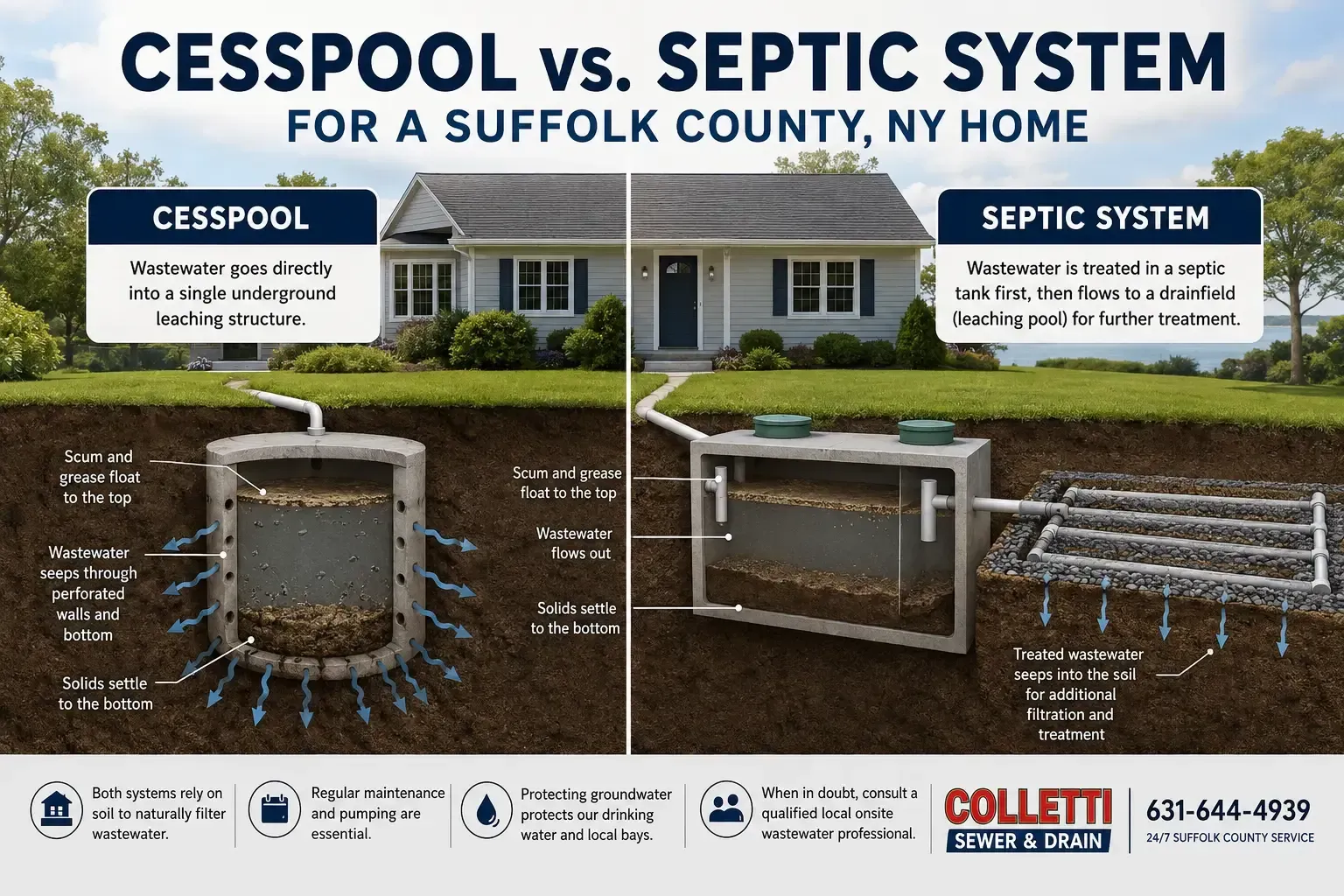
That does not mean a tree beside your yard has already damaged your line. The practical question is what is happening underground. Start by identifying your system and its location. The planting recommendations below address septic tanks and drainfields; they are not a planting specification for every cesspool in Suffolk County.
Signs roots may be affecting your line
In brief: Slow sinks, bathtubs or toilets and wastewater backing up into the house can signal a drainage problem that deserves a professional check, but these symptoms have several possible causes, so neither a nearby tree nor a slow drain is enough to confirm root intrusion.
Cornell's septic failure guide lists slow fixtures and sewage backups as warning symptoms. University of Nebraska-Lincoln Extension includes a blocked pipe between the house and septic tank among possible causes, along with household plumbing blockages and excess water entering the system.
When requesting an inspection, describe which fixtures are affected, when you first noticed the change, and whether it has happened before. Ask the professional to identify the blockage and assess the pipe. For broader system concerns, read our guide to signs of drain field or cesspool failure.
What to plant over and near the system, and what to keep off it
In brief: Keep septic drainfield planting shallow rooted, choose native grasses or appropriate ground covers, leave trees and shrubs off the drainfield, and keep vehicles and structures away from the system area while asking a septic professional to review any new tree placement near the buried components.
Use this table when planning the yard with your septic professional. Identify the tank and drainfield first so that a planting bed, parking area or shed does not end up in the wrong place. For a cesspool, request a separate review of the structure, connecting line and proposed landscaping.
Plant this, keep this off: EPA guidance for septic systems and drainfields
| Over or near the system | Do or don't | Why (source) |
|---|---|---|
| Grass over the drainfield | Do plant grass or keep existing native vegetation. | EPA's landscaping guide identifies these as the best drainfield covers. |
| Ground covers over the drainfield | Do choose appropriate shallow-rooted ground covers. | EPA's care page recommends native grasses and ground covers; its landscaping guide favors shallow roots. |
| Trees and shrubs on the drainfield | Don't plant them there. | Their roots can enter, clog and damage drainfield pipes, according to EPA. |
| Vegetable gardens on or near the drainfield | Don't use this area for vegetables. | EPA's landscaping guide advises against it; its care page warns of potential sewage exposure. |
| New trees near the drainfield | Do ask a septic professional about the appropriate distance. | EPA says the advice should account for your septic tank and landscape. |
| Vehicles over the system area | Don't park or drive on the drainfield; keep the tank area clear. | EPA warns that heavy loads can break lines and compact soil. |
| Decks, patios, storage sheds and pools | Keep them off the septic tank and drainfield area. | EPA's landscaping guide lists these among items to keep clear of the system. |
Sources: EPA SepticSmart landscaping guide and How to Care for Your Septic System. EPA also advises checking with a local designer or permitting authority before building in or on a drainfield.
Already have trees near the line?
In brief: Before changing the landscaping, have the location of your sewer line and cesspool or septic components confirmed, bring any available system records to the conversation, and arrange a professional check if drains are slowing so that the next step responds to an identified problem.
Start with existing drawings and service records. EPA's septic FAQ explains that the local permitting authority may have a system record drawing and that a septic professional can locate the components. Ask for help identifying the route of the line as well.
Only a licensed professional should open the structure. EPA recommends licensed inspection and pumping in its homeowner guide and leaves septic tank cleaning and repair to trained specialists in its guidance on septic systems after a flood.
If an inspection identifies damage, our guide explains what sewer line repair involves and costs. Keep routine care on the agenda, too: see how often to pump a septic tank or cesspool. A separate guide covers when to replace a cesspool instead of pumping it.
How we approach root problems
In brief: Start the conversation with Drain & Line Inspections to establish what needs attention before discussing work, then ask about Sewer Line Repair & Replacement or Preventative Maintenance as appropriate for the findings, all of which are services listed by Colletti Sewer & Drain for Suffolk County. Tell us about the drainage changes and any previous findings, and ask what needs to be checked before deciding on a repair.
Frequently asked questions
In brief: The useful starting points are the system layout, the planting above it and an inspection of any drainage problem, because prevention advice can guide your yard plans while a professional assessment is needed to establish whether roots are actually affecting your particular sewer or septic line.
Can tree roots grow into a sewer line or septic system?
Yes, roots can enter sewer lines and septic drainfield pipes. EPA identifies defects or openings as entry points in sewer lines, where roots may cause a blockage. Its septic landscaping guide also warns that tree and shrub roots can clog and break drain lines. Keep new trees off the drainfield and ask a septic professional about placement nearby. A tree's presence alone does not establish that your pipe contains roots.
What are the signs of tree roots in a sewer line?
Slow drains and wastewater backups can indicate a blockage, but they do not prove roots are causing it. Cornell and Nebraska Extension describe these symptoms in septic troubleshooting guidance with several possible causes. Have a professional check the affected line. Sewer inspection guidance from Lake County, California, explains that video inspection can reveal roots and other pipe defects. Ask what the inspection found before treating the problem as root intrusion.
What can I plant over a septic system or cesspool?
EPA recommends native grasses and appropriate ground covers over a septic drainfield. Its landscaping guide favors shallow-rooted planting and warns against vegetable gardens on or near the drainfield. Trees and shrubs should stay off it because their roots can damage the pipes. These recommendations address septic systems with drainfields. If you have a cesspool, have a professional review its location and connecting line before choosing planting for that area.
How far from a septic system should I plant a tree?
Ask a septic service professional to recommend a distance for your tank and landscape. That is EPA's advice for keeping roots from growing into the septic system. Bring the system drawing, if available, and identify the proposed planting location during the consultation. The recommendation should address your property rather than an assumed distance from the house. Keep trees off the drainfield itself, and confirm its location before finalizing the planting plan.
Should I put root killer down the drain?
Ask a septic or sewer professional before putting root killer or any other chemical down the drain. EPA advises against chemical drain openers for clogged drains in septic systems and warns that toxins can harm the organisms that treat waste. That guidance does not establish the suitability of a particular root-killer product for your pipe. Start by confirming the cause of the blockage, then discuss an appropriate response for the system you actually have.
Can a sewer line with roots be repaired?
Repair may be an option, but the line needs an assessment first. EPA lists repairing broken or leaking service lines among ways to reduce sewer overflows. An inspection can reveal roots as well as other defects, so ask what condition the pipe is in and what work the findings support. Our guide to what sewer line repair involves and costs provides background for that conversation without deciding the right work for your property.
Check the line before the roots get worse
In brief: If drains are slowing or you are planning trees near a buried line, contact Colletti Sewer & Drain to discuss an inspection and bring any available system records, so the conversation starts with your property's layout, the symptoms you have noticed and the questions that need answers.
Call 631-644-4939 or contact Colletti Sewer & Drain for help in Suffolk County.