How Often to Pump a Septic Tank (Suffolk County Guide, 2026)
TNTSEO United
Reviewed by Bernie Colletti, Colletti Sewer & Drain
Last updated: August 2026
TL;DR: How often to pump a septic tank in Suffolk County is a range, not one number. The New York State Department of Health says every two to three years. The US EPA and Cornell Waste Management Institute say three to five years, with regular professional inspection in between to set your own baseline. Household size, tank size, total water use, and a garbage disposal decide where you land inside that range. Most Suffolk homes sit on a cesspool rather than a septic tank, and a cesspool usually needs attention sooner and on a less predictable cycle. We are Colletti Sewer & Drain, a local Suffolk County cesspool and drain company. Call 631-644-4939 for a clear price range before we dispatch.
How often should you pump a septic tank?
In brief: Pump a residential septic tank every two to five years and have it inspected every two to three years, so the interval fits your household instead of a national average. New York State puts the interval at two to three years, while the US EPA and Cornell put it at three to five years with regular inspection in between.
New York State Department of Health: "A septic tank should be pumped out every two to three years" (publication 3208, Septic System Operation and Maintenance).
US EPA: "Household septic tanks are typically pumped every three to five years," and the average household system "should be inspected at least every three years by a septic service professional."
Cornell Waste Management Institute: pump "every three to five years," and "have the tank inspected every two to three years and pumped as needed" to set your schedule (Your Septic System).
Two to three years is the conservative rhythm, three to five is the outer edge for a lightly loaded system, and inspection is what turns a guess into a schedule.
The four things that move your interval
The EPA names four factors: household size, total wastewater generated, the volume of solids in that wastewater, and septic tank size. More people put more solids into the same tank, a bigger tank holds more sludge, and heavy water use shortens settling time. A garbage disposal changes the math most. Cornell states that a kitchen sink grinder "greatly increases solids loading so the tank must be pumped more often," and New York State says that if a disposal is used, "the septic tank size should be increased and pumped-out more often."
Vendor pages put a precise multiplier on that disposal effect. We could not verify one in any state or federal source, so we will not quote a figure. One thing that changes nothing at all: additives. New York State is blunt. "Avoid septic tank additives. A septic tank that is properly sized and maintained will adequately manage household wastewater without the use of additives."
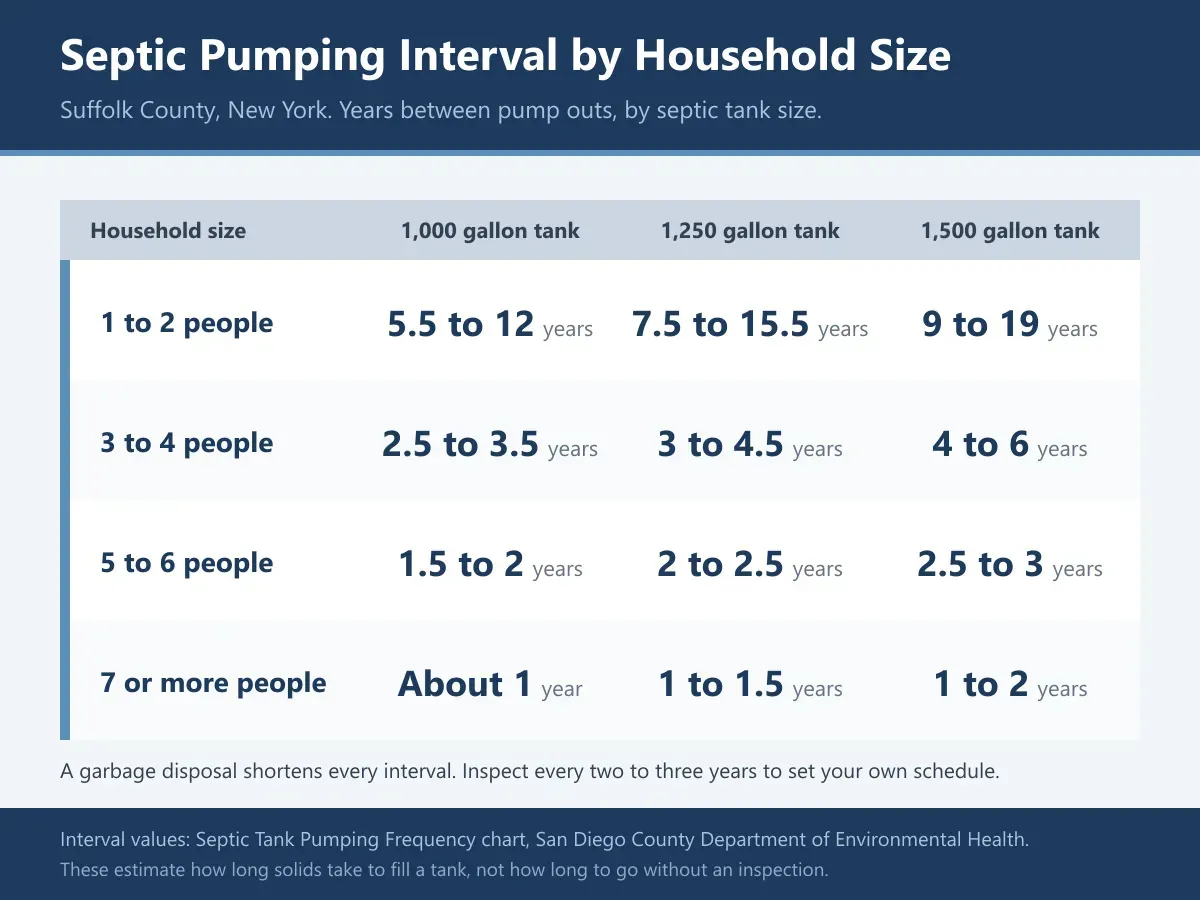
Septic tank pumping frequency by household size and tank size
In brief: A 1,000 gallon tank serving three to four people needs pumping roughly every 2.5 to 3.5 years, a 1,250 gallon tank every 3 to 4.5 years, and a 1,500 gallon tank every 4 to 6 years, according to the septic tank pumping frequency chart published by the San Diego County Department of Environmental Health. Larger households move sharply down that scale.
| Household size | 1,000 gallon tank | 1,250 gallon tank | 1,500 gallon tank | With a garbage disposal |
|---|---|---|---|---|
| 1 to 2 people | 5.5 to 12 years | 7.5 to 15.5 years | 9 to 19 years | Shorter. These long intervals assume no grinder solids at all. |
| 3 to 4 people | 2.5 to 3.5 years | 3 to 4.5 years | 4 to 6 years | Shorter. Suffolk County sizes a grinder home as if it had one more bedroom. |
| 5 to 6 people | 1.5 to 2 years | 2 to 2.5 years | 2.5 to 3 years | Shorter. Cornell says a grinder greatly increases solids loading. |
| 7 or more people | About 1 year | 1 to 1.5 years | 1 to 2 years | Shorter still. The tank is already near its limit. |
Interval values: Septic Tank Pumping Frequency chart, San Diego County Department of Environmental Health.
Read it honestly. Those figures estimate how long solids take to fill a tank, not how long you can go without anyone looking at it, and no agency recommends waiting a decade. Treat the long numbers as "you have room," not "wait." The disposal column has no published year values behind it, so we left it qualitative rather than invent one. Suffolk County's Residential Standards state that "a garbage grinder shall be equivalent to an additional bedroom for determining septic tank capacity."
Finding your tank size from your bedroom count
Suffolk County sets minimum septic tank capacities of 1,000 gallons for three bedrooms or fewer, 1,250 gallons at four, 1,500 at five, 1,750 at six, and 2,000 at seven (Suffolk County Department of Health Services, Residential Standards, April 2022). Count bedrooms, add one if you have a disposal, and you have a working estimate. It is a minimum, not a guarantee of what is buried in an older yard. For pricing, see what cesspool pumping costs in Suffolk County.
Cesspool or septic tank? On Long Island the answer changes
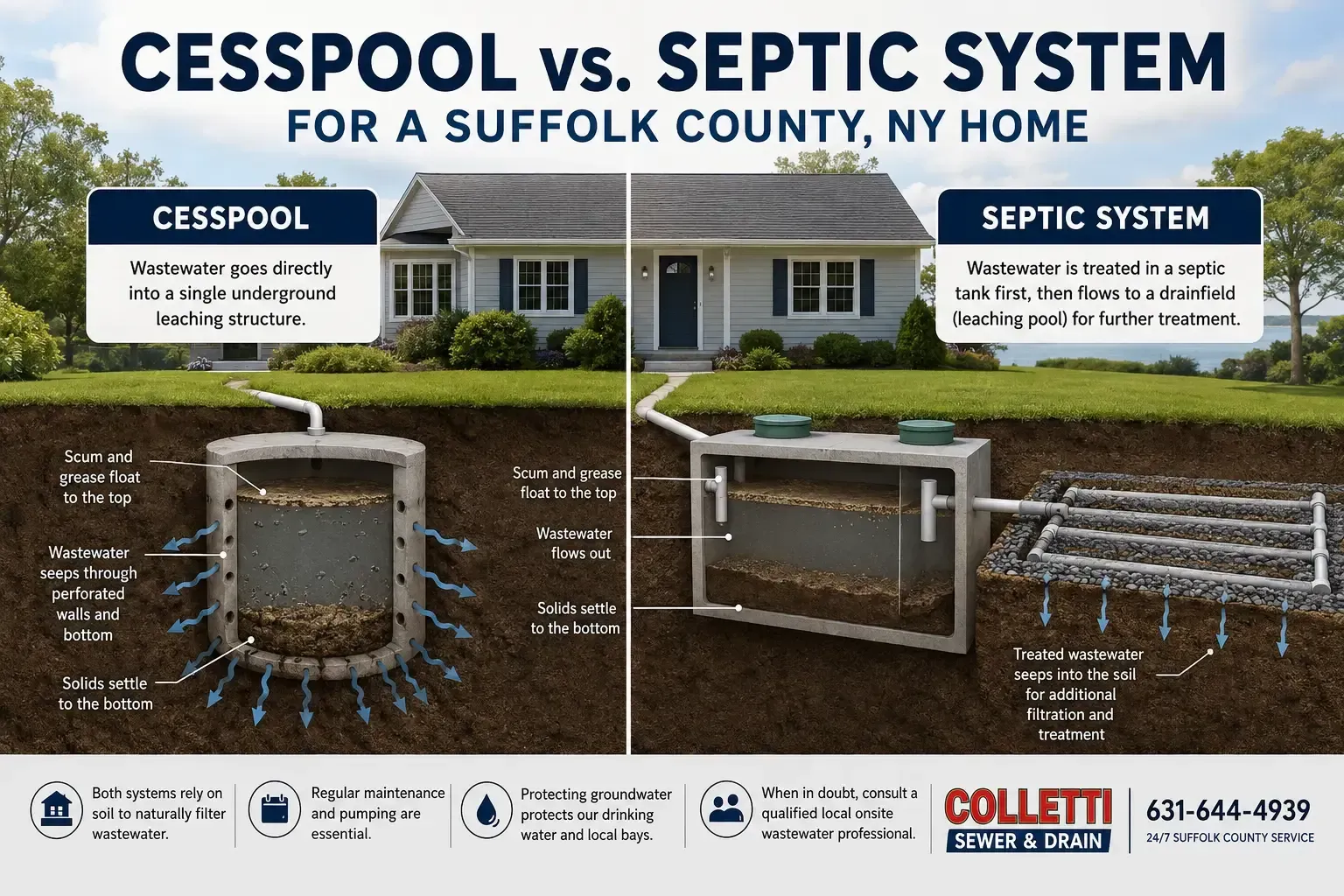
In brief: A cesspool is a single buried chamber that collects solids and leaches liquid into the soil at the same time, while a septic system splits those jobs into a tank plus a separate leaching structure. Because a cesspool has no settling tank protecting it, it typically needs attention on a shorter and less predictable cycle than a septic tank.
Suffolk County draws the line in its own materials. A conventional Long Island septic system is a septic tank plus a leaching pool, where solids settle, grease floats, and only the clear middle layer of effluent goes out. Cesspools are described as "antiquated structures that receive raw waste from the house and allow the untreated household effluent to leach into the surrounding soil," some built from cement blocks or bricks (Suffolk County Department of Health Services, Septic Improvement Program FAQ).
That changes your schedule. In a cesspool, raw solids and grease hit the same walls that are supposed to pass water into the soil. The sidewalls blind over, drainage slows, and the interval shortens with each cycle. Not a niche case here either: Suffolk County reports that 74 percent of county residents rely on cesspools and septic systems rather than sewers, and its Subwatersheds Wastewater Implementation Plan targets eliminating the 380,000 cesspools and septic systems countywide.
How to tell which one you have
- Count the covers. A septic system shows a tank plus one or more leaching pools. A single structure with nothing upstream often means a cesspool.
- Ask the county. The as built record on file with Suffolk County Department of Health Services shows what was permitted.
- Have a technician lift the lid. That is the only certain answer.
Do not go looking yourself. Cesspool covers and older block sidewalls fail, and a person standing on soft ground over an aging cesspool is why collapses on Long Island make the news. Sewer gas is the second hazard, and New York State's warning is plain: "Never enter a septic tank because it contains toxic gases that can be deadly." Keep children and pets off ground that feels soft or looks sunken.
"On Suffolk County cesspools, the calendar tells you less than the system does. When we lift a lid and the sidewalls are already glazed over, that house is on a shorter cycle than the neighbor's, no matter what the internet says. That is why we look before we quote."
Bernie Colletti, Colletti Sewer & Drain
If a cesspool has to be replaced, another bare cesspool is not what goes back in. Suffolk County's Residential Standards define an OWTS Replacement as "the abandonment and/or removal of an existing individual sewerage system or cesspool and installation of a new individual sewerage system," and an individual sewerage system means a septic tank or I/A OWTS tank plus a leaching structure. Confirm your property with the Office of Wastewater Management, and see new cesspool installation cost.
Warning signs your system is overdue, and what happens if you skip it
In brief: Slow drains across several fixtures at once, gurgling toilets, odors indoors or over the tank, wet or unusually green ground above the leaching area, and any backup are the signs a Suffolk County system is overdue. Call before the next fixture backs up, because the repair path gets far more expensive once solids reach the leaching structure.
- Several fixtures draining slowly at once. One slow sink is a clog. The whole house slowing down points at the system.
- Gurgling from toilets or floor drains when a washer or tub empties.
- Odor indoors, at a floor drain, or outside over the tank. More in our guide to a basement that smells like sewer.
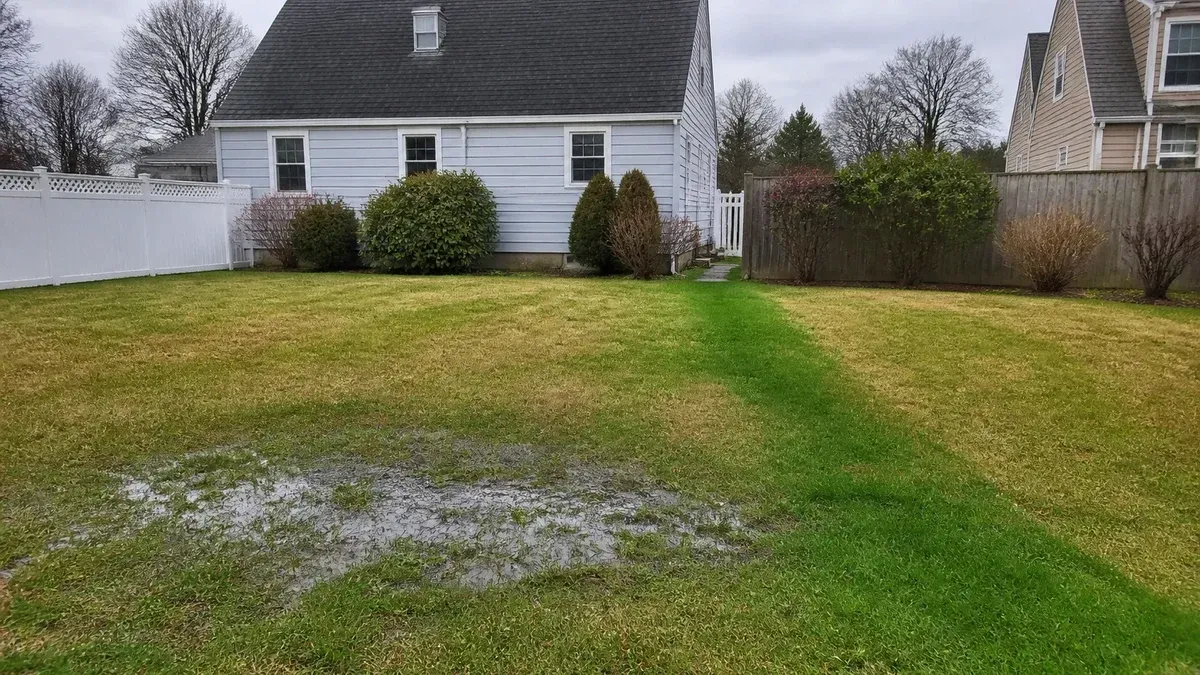
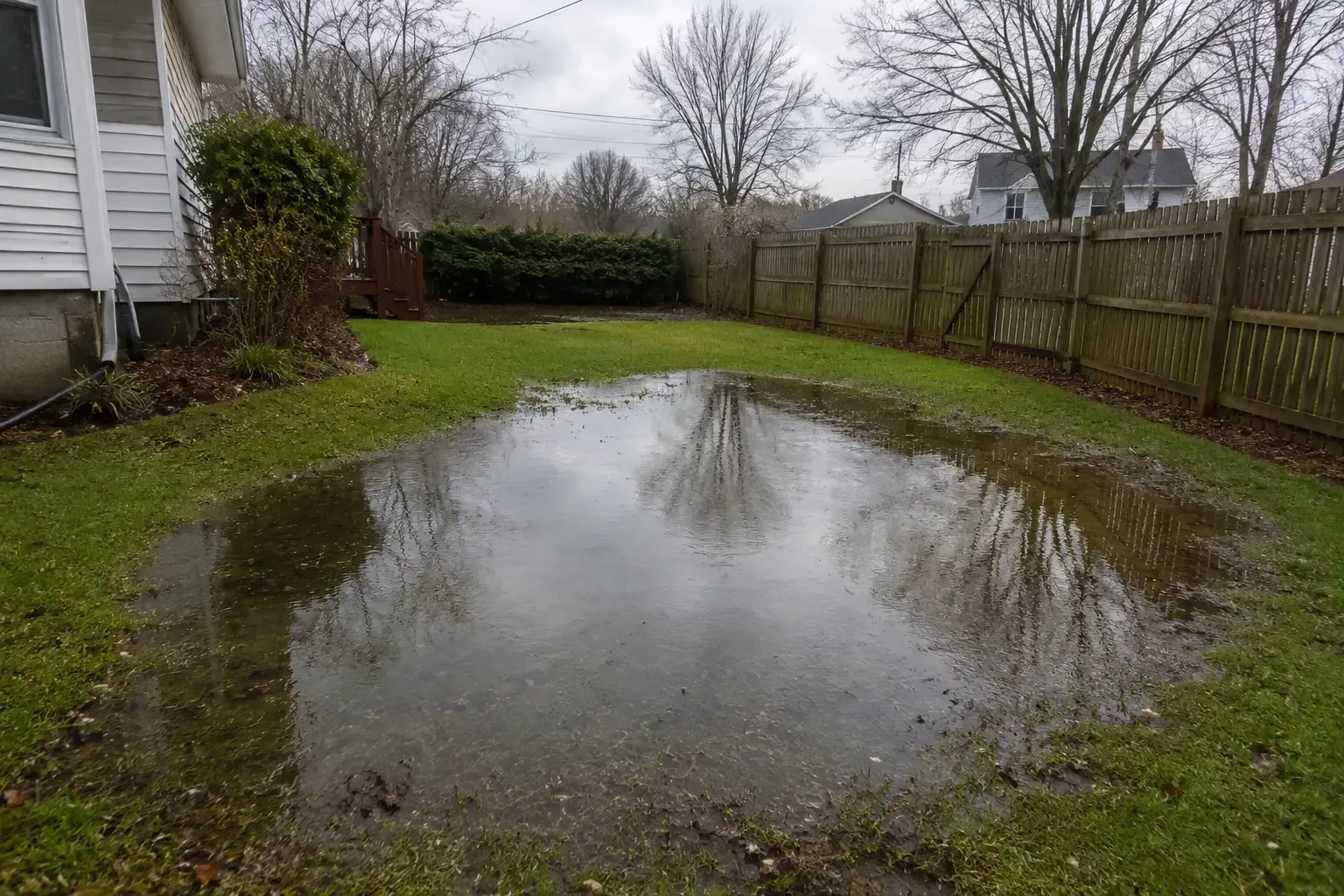
- Wet, spongy, or unusually green ground over the leaching area, even in dry weather. Keep off it.
- Any backup into a tub, toilet, or basement drain. That is a same day call.
What follows is mechanical. Once the tank fills past its working capacity, solids stop settling and carry into the leaching structure, where they blind the soil surface. Water stops infiltrating, the leaching area fails, and a maintenance visit becomes a repair or a replacement.
Suffolk County draws the legal line at the same place. Article 6 of the Suffolk County Sanitary Code treats a system as failed under conditions including wastewater rising to the surface over the system, or "where pumping of the Cesspool, septic tank, I/A OWTS, or Leaching Structure is required four or more times per year due to the infiltration of groundwater into the system, a collapsed Leaching Structure, or clogged Absorption Area." The code excludes regular scheduled preventive maintenance, so four or more emergency pump outs a year is the threshold, not routine maintenance.
Suffolk County rules and permits homeowners should know
In brief: Routine pumping of an existing septic tank or cesspool is maintenance and does not require a Suffolk County permit, and the county sets no calendar interval for pumping a working system. Installing, replacing, or modifying a system does require Suffolk County Department of Health Services approval before work starts.
- Pumping is maintenance. No county filing, and no fixed county interval. Article 6 treats regular scheduled preventive maintenance as exactly that.
- New systems need a permit. The Residential Standards state that "permits are required for all new sewage disposal systems," with site plan approval before construction starts. Replacements, retrofits, and I/A OWTS modifications run through the county too.
- Your hauler reports the pump out. Article 6 requires contractors holding an active Suffolk County liquid waste license to report all pumping of septic tanks, I/A OWTS, cesspools, grease traps, and leaching structures to the department. Good reason to use a licensed company.
- I/A OWTS carry their own contract. A fully executed operation and maintenance contract between the maintenance provider and the property owner must be submitted to the department, and the provider schedules a pump out when measured solids exceed the manufacturer's specification (Suffolk County Article 19 I/A OWTS Standards).
This is maintenance guidance, not a code ruling. Confirm what applies to your property with the Suffolk County Department of Health Services Office of Wastewater Management.
How to choose an honest Suffolk County cesspool company
In brief: Choose a company that answers 24/7, works Suffolk County every week, gives a clear price range before dispatch, inspects before quoting any work beyond a pump out, and separates maintenance from repair and replacement. Anyone quoting a replacement before looking inside the system has not diagnosed anything.
Look for real 24/7 availability, crews who work Babylon, Brookhaven, Huntington, Islip, Smithtown, Riverhead, Southampton, Southold, and Shelter Island every week and know the sandy soil and high water table, a clear price range before the truck rolls, and proper licensing and legal septage disposal.
Walk away from a flat online price for a system nobody has seen, a replacement pitch before any diagnosis, anyone claiming no permit is ever needed, and anyone selling an additive as the fix. If you are buying or selling, the standard is different again: see cesspool inspection before you buy or sell.
Frequently asked questions
How often should a septic tank be pumped?
Most residential septic tanks should be pumped every two to five years. The New York State Department of Health says every two to three years, while the US EPA and Cornell Waste Management Institute say three to five years, with a professional inspection at least every three years. Household size, tank size, water use, and a garbage disposal decide where you fall in that range.
How often should a cesspool be pumped on Long Island?
A cesspool generally needs attention on a shorter and less predictable cycle than a septic tank, because it collects raw solids and leaches liquid through the same walls with no settling tank protecting it. Suffolk County describes cesspools as antiquated structures that receive raw waste and let untreated effluent leach into the soil. We set the interval from what we see when we open it.
How do I know if my Suffolk County home has a cesspool or a septic tank?
Count the access covers, since a septic system normally has a tank plus one or more leaching pools while a cesspool is often a single structure. You can also request the as built record from the Suffolk County Department of Health Services, or have a technician lift the lid. Do not attempt that yourself, because covers and older sidewalls fail and sewer gas is dangerous.
Does Suffolk County require you to pump your septic tank?
Suffolk County sets no fixed calendar interval for pumping a working septic system, and Article 6 of the Suffolk County Sanitary Code treats routine pumping as regular scheduled preventive maintenance. What the county regulates is construction: permits are required for all new sewage disposal systems and for replacements, retrofits, and I/A OWTS work. Licensed haulers must also report pumping to the department.
What are the signs a septic tank needs pumping?
The common signs are several fixtures draining slowly at once, gurgling from toilets or floor drains, odors indoors or over the tank, wet or unusually green ground above the leaching area, and any backup into a tub, toilet, or basement drain. One slow sink is a clog, but a whole house slowing down points at the system.
Does a garbage disposal mean I need to pump more often?
Yes. Cornell Waste Management Institute states that a kitchen sink grinder greatly increases solids loading so the tank must be pumped more often, and the New York State Department of Health says that if a disposal is used the tank should be larger and pumped out more often. Suffolk County counts a grinder as an extra bedroom when sizing a tank.
What happens if you never pump your septic tank?
Solids fill the tank, stop settling, and carry into the leaching structure, where they blind the soil surface so water can no longer infiltrate. The leaching area then fails and a routine maintenance visit becomes a repair or a full replacement. Suffolk County's Article 6 treats a system as failed when wastewater surfaces over it or it needs pumping four or more times a year.
How much does it cost to pump a septic tank or cesspool in Suffolk County?
Pricing depends on tank size, how accessible the cover is, how long it has been since the last service, and whether the call is after hours. We give every Suffolk County homeowner a clear price range before we dispatch rather than quoting a flat number for a system nobody has seen. Our full breakdown is in our cesspool pumping cost guide.
Get your Suffolk County cesspool or septic tank on a schedule
If you cannot remember the last pump out, that is your answer. We are Colletti Sewer & Drain, a local Suffolk County cesspool and drain company, and we answer 24/7. We give you a clear price range before we dispatch, we inspect before we quote, and we tell you plainly whether this is maintenance or a repair. Call 631-644-4939 or schedule Suffolk County service online. Free on site inspection.