24/7 Emergency Cesspool Service in Suffolk County, NY: What to Do RIGHT NOW
Last updated: June 2026
Reviewed by Bernie Colletti, Colletti Sewer & Drain
If you're facing an active cesspool backup in Suffolk County, NY: stop using water, call Colletti at 631-644-4939, and we'll respond within 1 hour in most of Suffolk. Typical emergency cesspool service in 2026 runs $450 to $900+, with major repairs quoted on-site. If sewage is backing up into a tub, basement drain, toilet, yard, or laundry area, treat it as an urgent health and property risk. Start by stopping all water use, keeping people and pets away from the affected area, taking quick photos for insurance, and calling 631-644-4939 for emergency help. Colletti Sewer & Drain provides 24/7 Suffolk County response for backups, overflows, failed cesspools, and sewer-drain emergencies.
What is an emergency cesspool service?
In brief: Emergency cesspool service is the urgent dispatch, inspection, pumping, clearing, and stabilization of a failing cesspool or sewer-drain system before the damage spreads.
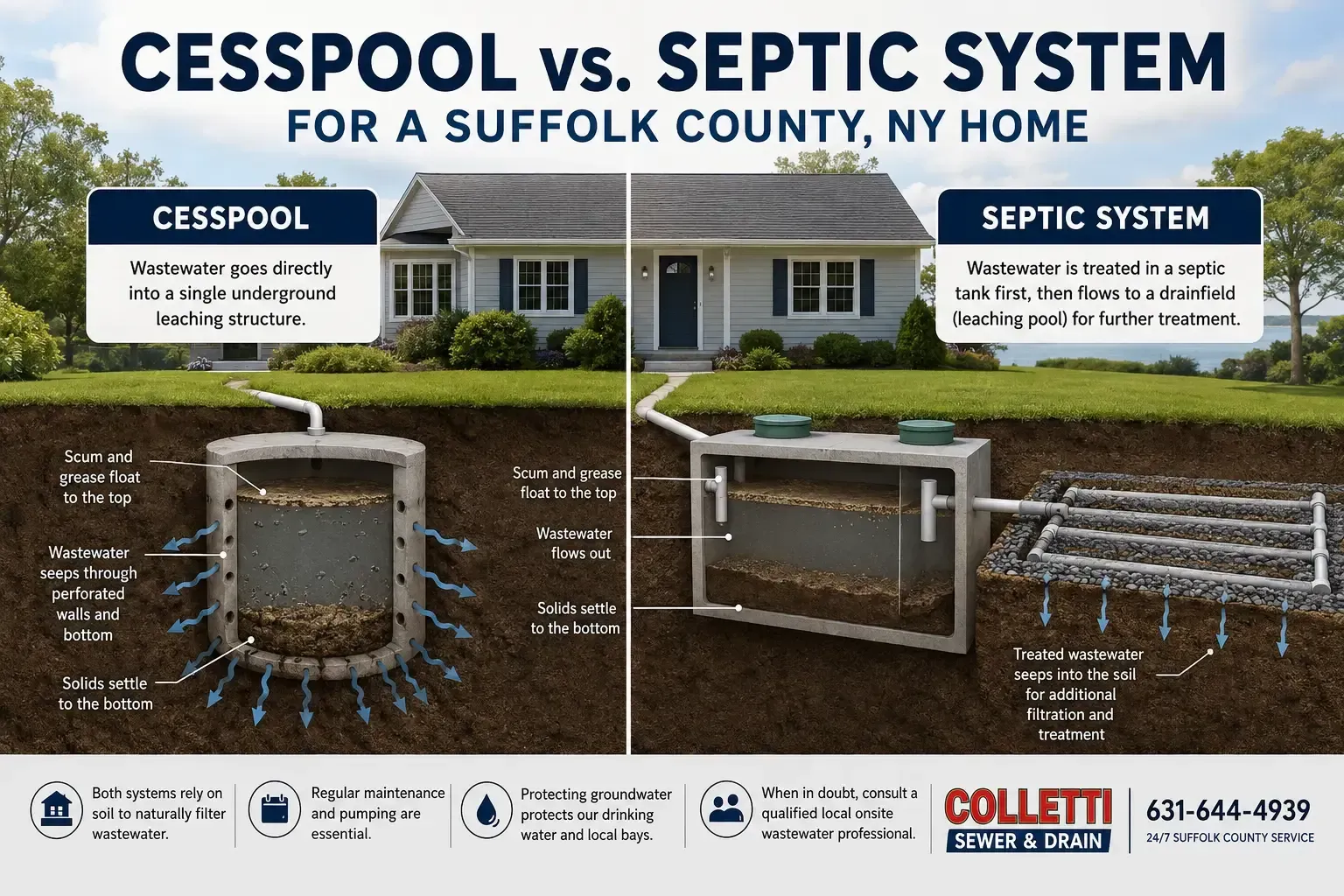
An emergency cesspool service is on-demand response to a residential or commercial system failure, typically a backup, overflow, or sudden total system failure, that requires immediate pumping, jetting, or temporary remediation to prevent property damage or health hazards. In Suffolk County, NY, 24/7 emergency providers commit to same-day response.
In practical homeowner terms, this is the call you make when sewage is no longer staying where it belongs. That may mean wastewater rising through a basement drain, toilets that will not go down, a shower or tub filling with dirty water, a wet sewage-smelling area near the cesspool, or all drains slowing at the same time.
Suffolk County treats exposed sewage seriously. The county’s General Sanitation page says the Bureau will investigate complaints of sewage exposed to the atmosphere, and Suffolk County Wastewater Management explains that properly designed and maintained sewage disposal systems help reduce disease transmission and protect ground and surface waters.
For active backups, do not wait for a scheduled appointment. Call Colletti’s emergency sewer and drain repair help line and tell the dispatcher exactly what you see, where the sewage is appearing, and whether water is still running in the home.
What to do RIGHT NOW, the first 15 minutes
In brief: Stop water use, isolate the area, ventilate if safe, document the damage, and call Colletti before trying any DIY drain fix.
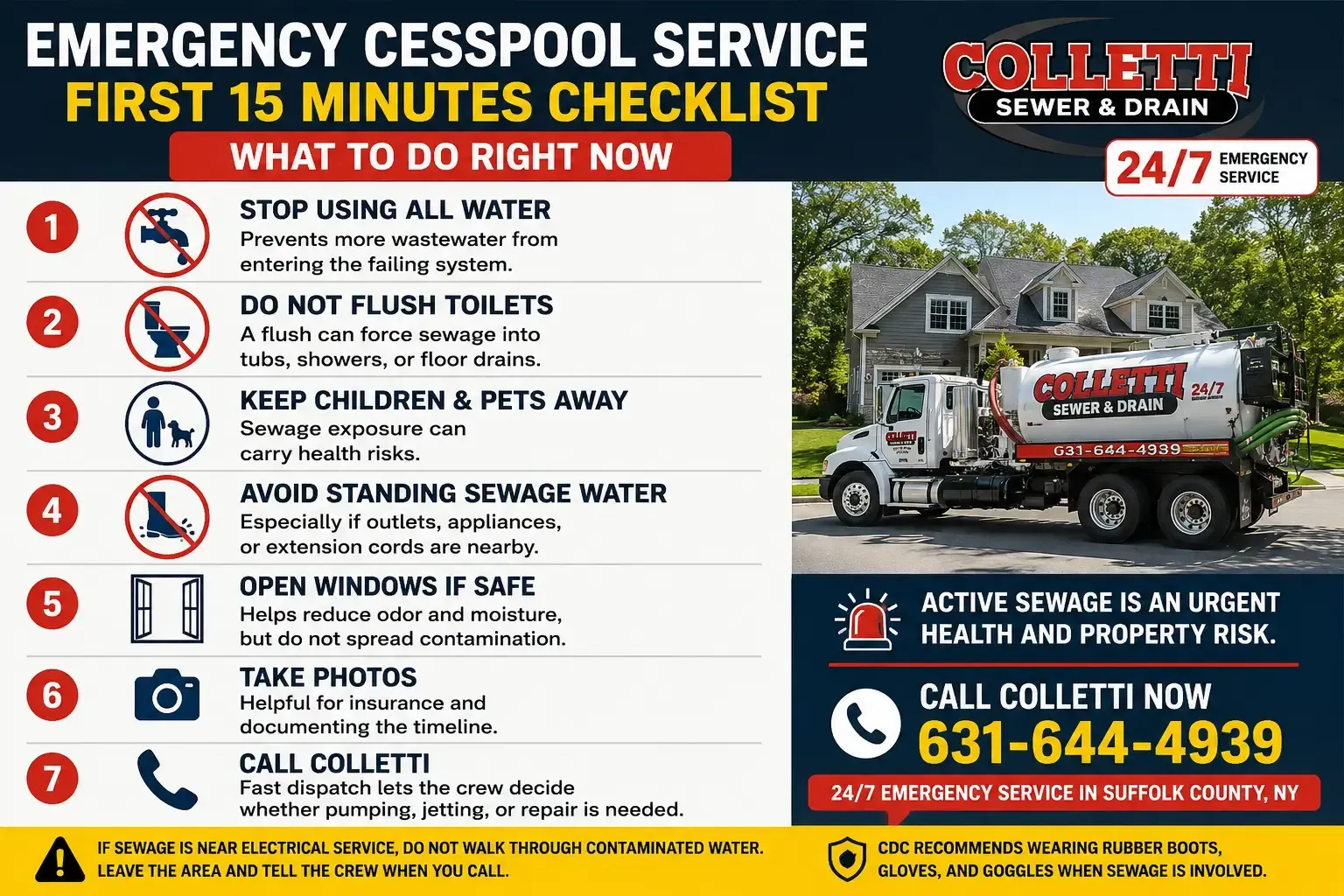
The first 15 minutes matter because every flush, shower, washing machine cycle, or sink use can push more wastewater into the backup. Follow this order.
| Do this now | Why it matters |
|---|---|
| Stop using all water | Prevents more wastewater from entering the failing system |
| Do not flush toilets | A flush can force sewage into tubs, showers, or floor drains |
| Keep children and pets away | Sewage exposure can carry health risks |
| Avoid standing sewage water | Especially if outlets, appliances, or extension cords are nearby |
| Open windows if safe | Helps reduce odor and moisture, but do not spread contamination |
| Take photos | Helpful for insurance and documenting the timeline |
| Call Colletti | Fast dispatch lets the crew decide whether pumping, jetting, or repair is needed |
“My first advice is simple: stop running water and do not keep flushing to test the line. Keep kids and pets away, take a few photos if you can do it safely, and call us. We can walk you through the next steps while the truck is on the way.”
Bernie Colletti, Colletti Sewer & Drain
The CDC advises homeowners to use rubber boots, rubber gloves, and goggles when sewage is involved. If sewage is near electrical service, do not walk through contaminated water to reach a panel. Leave the area and tell the crew when you call.
For immediate dispatch, call Colletti now at 631-644-4939.
Signs you have a real cesspool emergency
In brief: A real cesspool emergency usually involves sewage backup, overflow, strong sewage odor, a suddenly wet yard, or multiple drains failing at once.
One slow sink may be a small fixture clog. A whole-home backup is different. Call for emergency cesspool service if you see any of these warning signs.
- Sewage backing up into a tub, shower, toilet, basement, laundry room, or floor drain
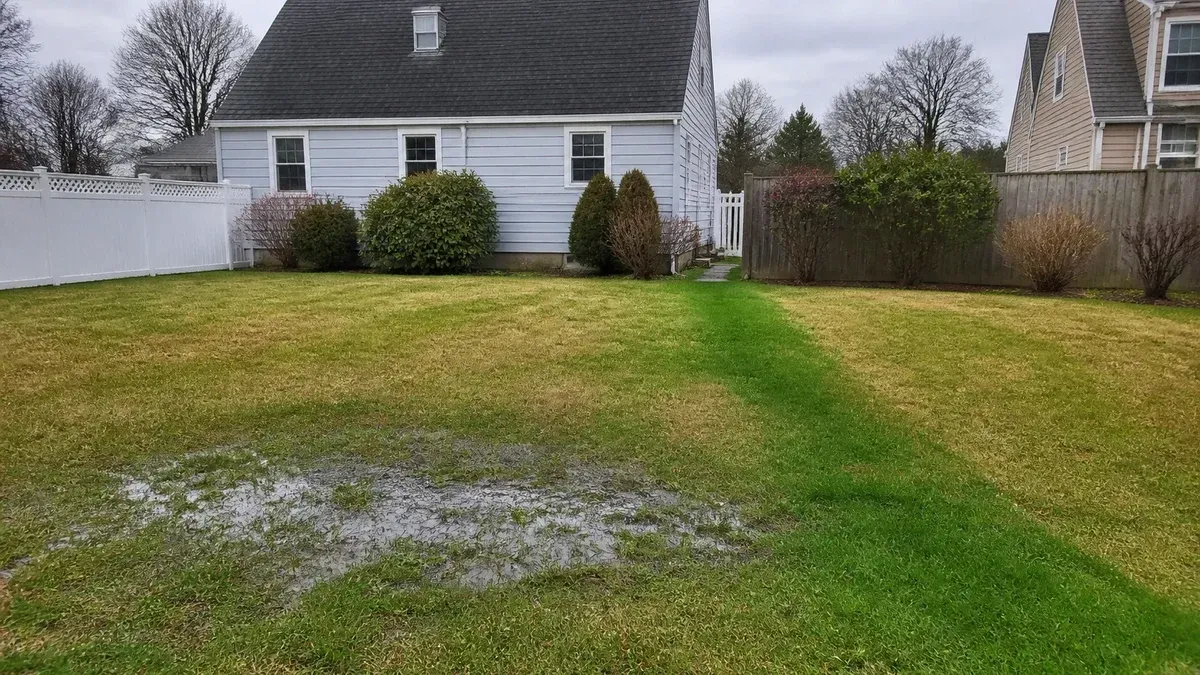
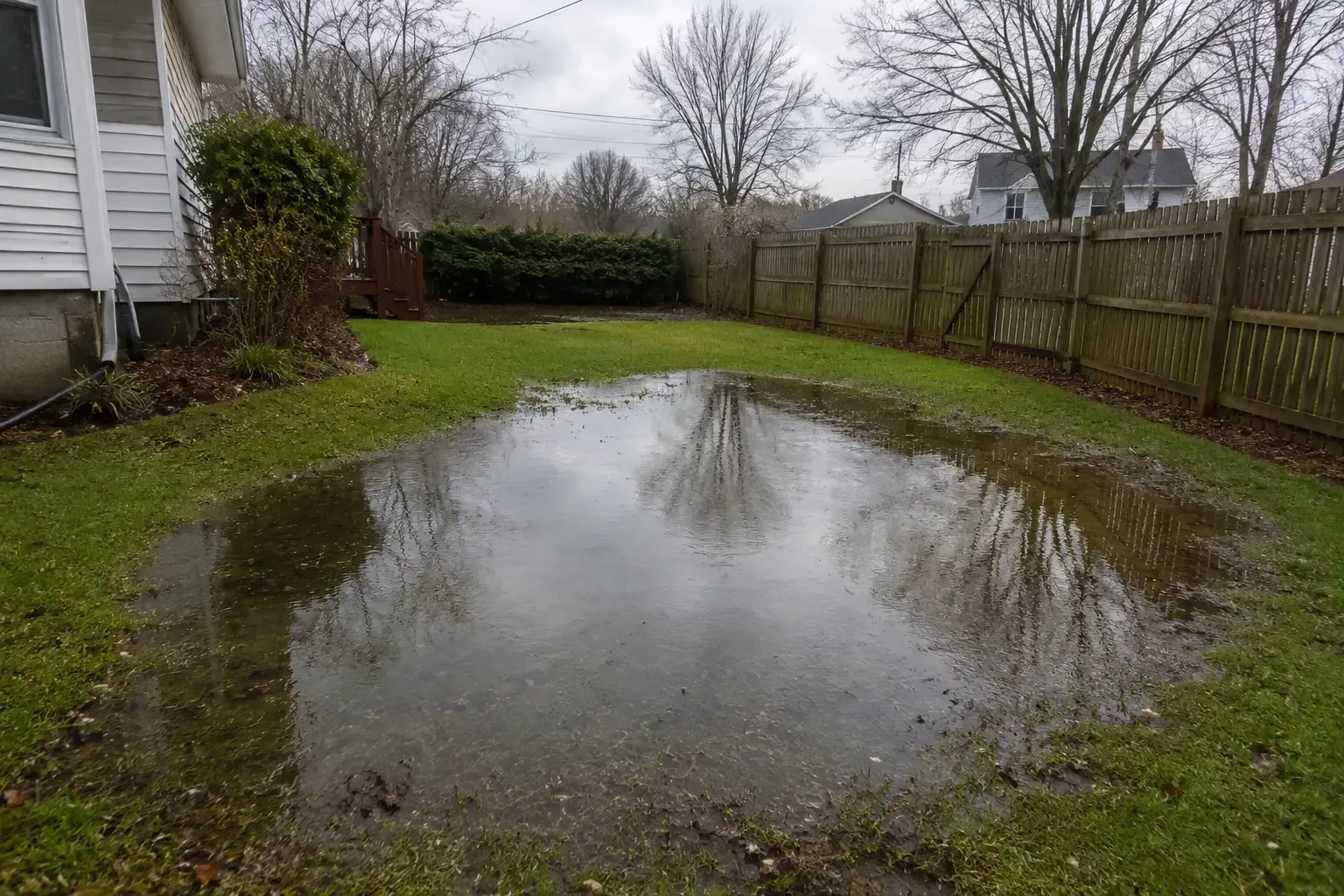
- Wastewater overflowing outdoors near the cesspool, drainfield, or low area of the yard
- Strong sewage smell in the basement, bathroom, crawlspace, or near the cesspool cover
- A lush green or wet grass spot that appears suddenly near the system
- Toilets, tubs, sinks, and laundry drains all stopping or gurgling at once
- Water rising from the lowest drain in the house
- A recent heavy-rain event followed by slow drains, odors, or visible sewage
CDC onsite wastewater guidance lists slow sinks, slow toilets, overflowing floor drains, and visible sewage outside the home as signs that a septic or onsite wastewater system is not working properly. NYS DOH emergency guidance also lists sluggish plumbing, sewage backup, and soil erosion around a drainfield as possible signs of septic system damage.
Unlike directory listings or price aggregators, this guide is written for the homeowner who is actively dealing with a backup and needs a local crew, a realistic price range, and the next safe step.
How much does emergency cesspool service cost in Suffolk County?
In brief: Emergency cesspool service in Suffolk County usually costs more than scheduled service because the crew is being dispatched urgently, often after hours, on weekends, or during storm conditions.
In Suffolk County, emergency cesspool service in 2026 typically runs $450 to $900+ for emergency pumping, while after-hours, weekend, holiday, or blockage calls commonly start around $700+ before add-on work. Jetting or line clearing may add $200 to $500, and major repairs should be quoted on-site before work begins.
| Service type | Typical 2026 cost in Suffolk County | Notes |
|---|---|---|
| Emergency cesspool pumping | $450 to $900+ | Depends on timing, access, tank condition, volume, and urgency |
| After-hours or weekend emergency response | $700+ | Often higher than weekday scheduled pumping |
| Jetting or line clearing | Add $200 to $500 | Used when the backup is caused by a blockage, grease, roots, or line obstruction |
| Locate-and-repair work | Quoted on-site | Needed when the failure involves a collapsed line, damaged cover, broken pipe, or structural issue |
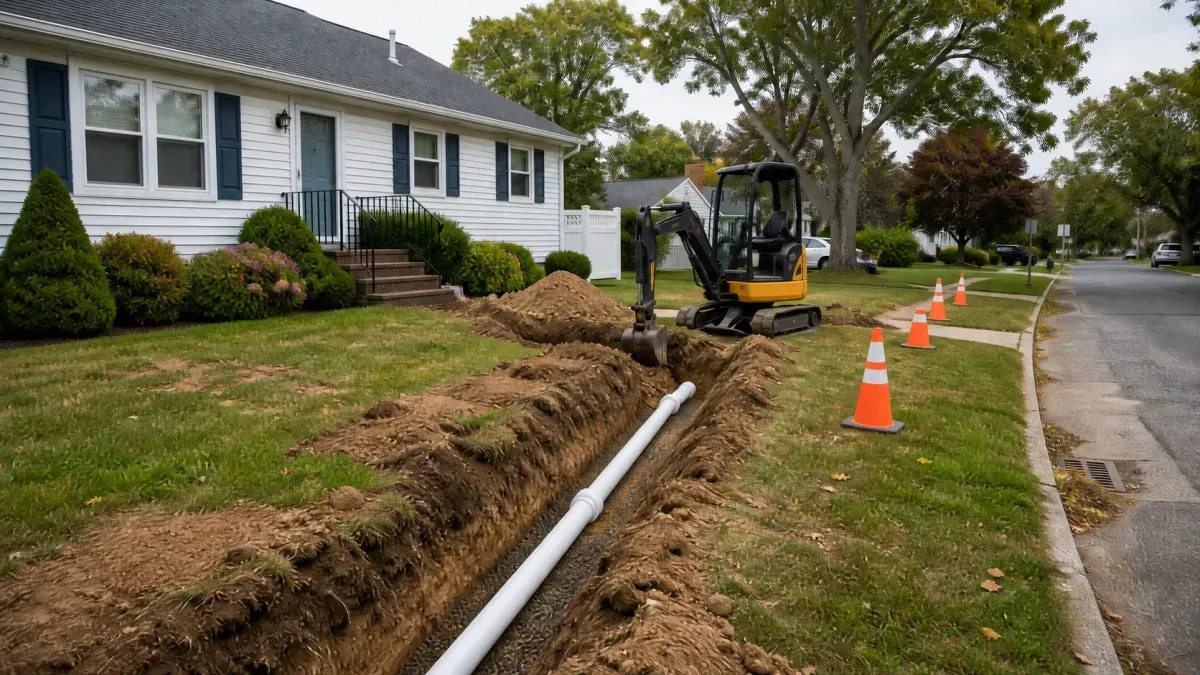
| Major cesspool or sewer repair | Written estimate after inspection | Price depends on excavation, depth, access, permits, and replacement scope |
Colletti’s pricing rule is straightforward: emergency work should be urgent, but it should not be vague. Before work starts, ask what the crew is doing first, what is included in the emergency rate, and when a repair becomes a separate quote.
If your issue can wait, compare the emergency number against scheduled cesspool pumping cost so you understand the difference between planned maintenance and active failure response. If sewage is rising, the emergency premium is usually worth it because delay can mean flooring damage, contaminated belongings, odor spread, and a larger repair.
How fast can Colletti get to you?
In brief: Colletti aims for under 1 hour in most of Suffolk County, with far East End calls sometimes closer to 2 hours during peak demand, storms, weekends, or holiday periods.
Most Suffolk County emergency cesspool calls can be reached within 1 hour in Colletti’s core service area, while far East End calls may take up to 2 hours during peak demand, weather events, weekends, or holiday periods.
| Suffolk County region | Typical arrival window | Common examples |
|---|---|---|
| Western Suffolk | About 60 to 90 minutes | Babylon, Huntington, Smithtown, Islip west, Dix Hills, Commack, Deer Park |
| Central Suffolk | Often under 1 hour | Brookhaven, Coram, Middle Island, Medford, Patchogue, Shirley, Mastic, Ridge |
| East End | About 90 minutes to 2 hours | Riverhead, Southold, Southampton, East Hampton, Shelter Island, North Fork, South Fork |
Suffolk County is divided into 10 towns: Babylon, Brookhaven, East Hampton, Huntington, Islip, Riverhead, Shelter Island, Smithtown, Southampton, and Southold, according to New York State’s county profile. Travel time changes by town, traffic, ferry access, storm conditions, and whether multiple homes are calling during the same weather event.
“If you are in our central and east Suffolk core, we are usually working toward under an hour. If you are on the far East End or it is a storm weekend, I would rather tell you honestly that it can be closer to two hours than promise something I cannot deliver.”
Bernie Colletti, Colletti Sewer & Drain
For local trust signals before a non-emergency appointment, you can read about the local team behind Colletti or check Suffolk County customer reviews. For an active sewage backup, call first and review later.
What Colletti does on arrival
In brief: The crew identifies the backup source, pumps if needed, jets or clears blockages when appropriate, explains the root cause, and quotes repair work before moving beyond emergency stabilization.
When Colletti arrives, the first job is to stabilize the situation. That usually means identifying whether the failure is in the cesspool, main line, house line, overflow structure, or another component.
A typical emergency visit may include:
- Site inspection
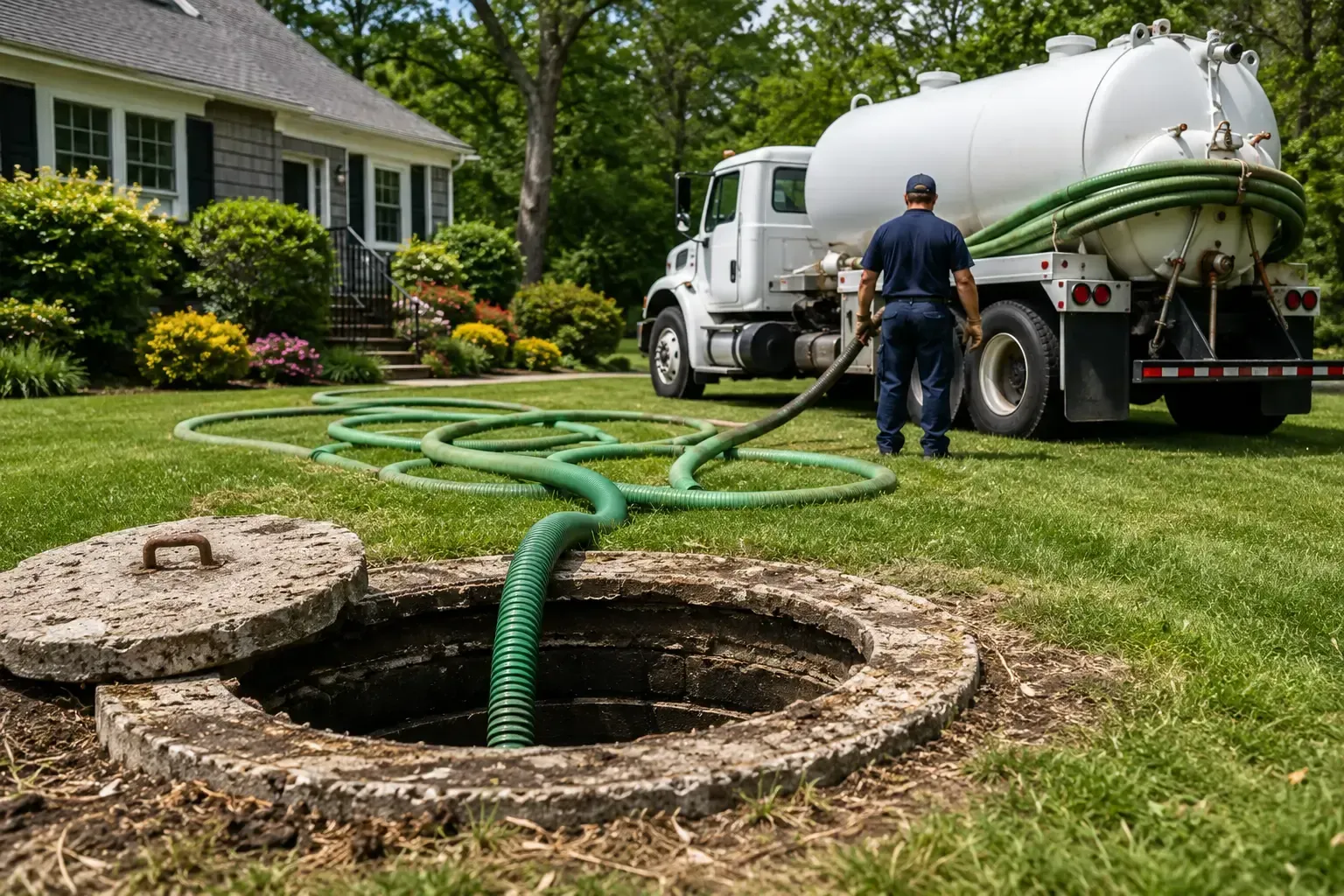
The crew checks the backup location, outdoor access, covers, cleanouts, visible pooling, and drainage behavior. - Emergency pumping
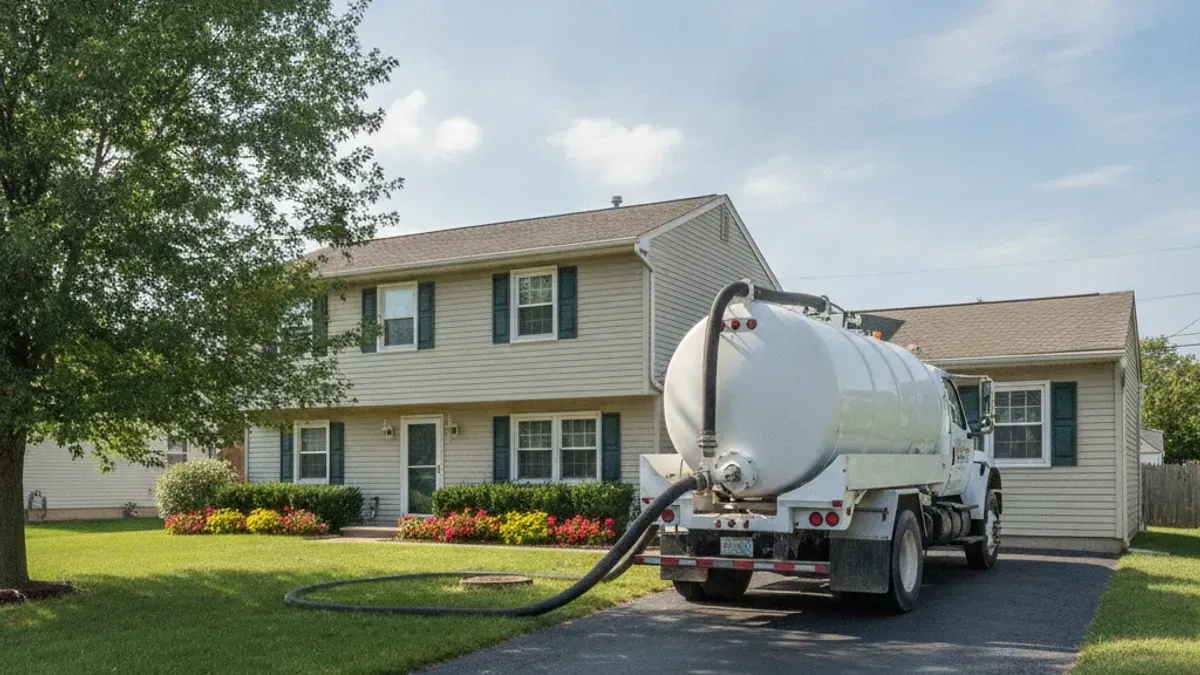
If the cesspool is full or surcharged, pumping may bring the system down enough to stop active backup and allow further diagnosis. - Jetting or line clearing
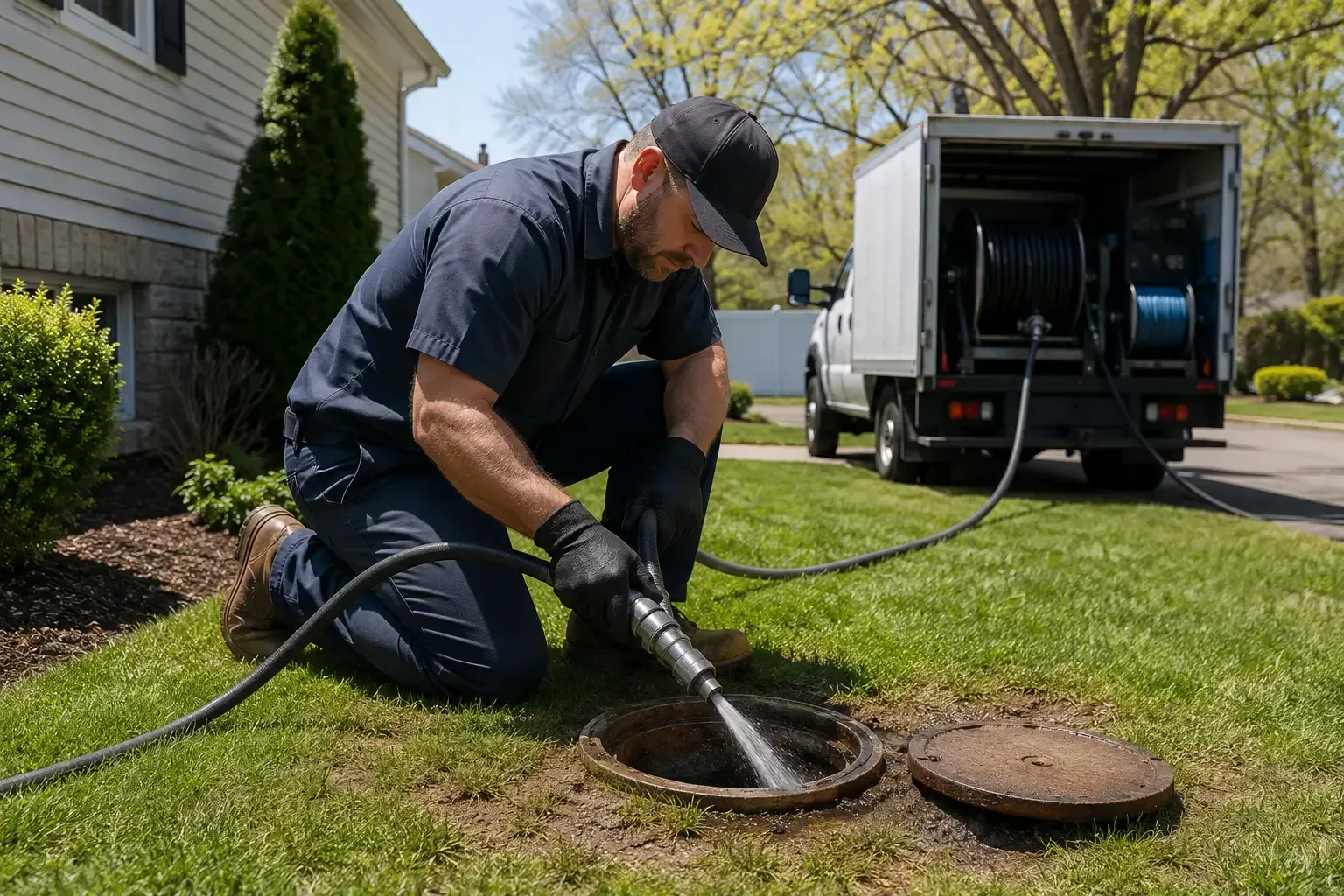
If the issue appears to be a line blockage, grease, roots, or sludge, sewer jetting may be recommended. - Root-cause diagnosis
The crew looks for signs of collapsed pipe, failed cesspool wall, blocked inlet, saturated leaching area, clogged line, or heavy solids. - Repair estimate
If the emergency cannot be fully solved by pumping or clearing, Colletti explains the repair scope and provides an on-site quote.
For service that is urgent but not yet overflowing, Colletti also provides same-day cesspool pumping and cleaning and sewer line repair and replacement for damaged, blocked, or collapsed lines.
After the emergency, preventing the next one
In brief: The best way to avoid another emergency is to change the maintenance schedule, address the root cause, and inspect the components that failed.
Once the backup is stopped, ask the crew what caused it. A pump-out alone may solve an overfilled system, but it may not solve a cracked line, root intrusion, grease blockage, failed cesspool wall, or saturated leaching area.
Good next steps include:
- Set a realistic pumping frequency based on household size and usage
- Avoid flushing wipes, hygiene products, paper towels, grease, and food solids
- Ask whether an effluent filter makes sense for your system
- Schedule preventive inspection if the system is older or has repeated backups
- Keep cesspool covers accessible, visible, and safe
- Reduce laundry stacking, such as multiple heavy loads in a row
- Keep roof drains, sump discharge, and stormwater away from wastewater components
EPA homeowner resources explain that regular septic maintenance helps avoid costly system repairs. Suffolk County Wastewater Management also notes that properly designed, maintained, and operated sewage disposal systems help reduce disease transmission and protect groundwater and surface waters.
Frequently asked questions about emergency cesspool service in Suffolk County, NY
What counts as a cesspool emergency in Suffolk County?
A cesspool emergency is any situation where sewage or wastewater is backing up, overflowing, or threatening to enter living space. Common examples include sewage in a basement, tubs filling with dirty water, toilets that will not drain, a strong sewage smell inside, or visible wastewater outside near the cesspool. If multiple drains stop at once, treat it as urgent and stop using water.
How fast can a cesspool company arrive in Suffolk County?
Arrival depends on where you are in Suffolk County, traffic, weather, call volume, and whether the call is after hours. Colletti typically aims for under 1 hour in much of central and east Suffolk, with far East End calls sometimes closer to 2 hours during storms, weekends, holidays, or peak emergency demand. Call immediately so dispatch can give you the most realistic window.
How much does emergency cesspool service cost in Suffolk County?
Emergency cesspool service in Suffolk County typically runs $450 to $900+ for emergency pumping in 2026. After-hours, weekend, holiday, or storm calls often start around $700+ before add-ons. Jetting or line clearing can add $200 to $500. Major repairs, excavation, pipe replacement, or collapsed cesspool work should be quoted on-site before the repair begins.
What should I do until the cesspool crew arrives?
Stop using all water. Do not flush toilets, run showers, start laundry, or use the dishwasher. Keep children and pets away from the affected area, avoid touching sewage, and do not step into standing wastewater near electrical outlets or appliances. Take photos if you can do so safely. Then call Colletti and describe where the sewage is appearing.
Is sewage backup a health hazard?
Yes. Sewage backup can expose people to bacteria, viruses, parasites, and contaminated water. CDC guidance says to wear rubber boots, rubber gloves, and goggles when sewage is involved, and CDC onsite wastewater guidance warns that water contaminated with sewage can make people sick. Keep people away from the area until the backup is stopped and cleanup is handled safely.
Will Colletti work weekends or holidays?
Yes. Emergency cesspool and sewer-drain failures do not wait for business hours, so Colletti provides 24/7 emergency response in Suffolk County. Weekend, holiday, and after-hours calls may cost more than scheduled weekday service because the crew is being dispatched urgently. Ask for an itemized explanation before work starts so you understand the emergency rate and any add-on services.
Do I need to evacuate during a cesspool emergency?
Not always, but you should leave the affected area immediately if sewage is entering living space, odors are strong, wastewater is spreading, or electrical hazards are nearby. Children, older adults, pets, and anyone with health concerns should stay away from contaminated areas. If the backup is severe, affects sleeping areas, or cannot be isolated, consider staying elsewhere until cleanup is complete.
What's the difference between an emergency cesspool call and a scheduled pump?
A scheduled pump is preventive maintenance performed before there is an active backup. An emergency cesspool call happens when the system is already failing, sewage is backing up, drains have stopped, or wastewater is overflowing. Emergency service usually costs more because it requires urgent dispatch, faster response, and sometimes pumping, jetting, locating, or temporary remediation on the same visit.