Drain Field Failure: Signs, Causes and Fixes (2026)
TL;DR: The clearest signs of drain field failure are several slow drains at once, gurgling, sewage odor, wet or unusually lush ground over the leaching area, and backups that return soon after pumping. Causes range from a clogged house line or root intrusion to solids carryover, compacted soil, a saturated absorption area, structural collapse, or seasonally high Long Island groundwater. Because the same symptom can point to routine maintenance or replacement, we inspect before quoting and explain the cause first. Colletti Sewer & Drain is a local Suffolk County cesspool and drain company serving homeowners around the clock. If sewage is backing up, stop using water and call us now at 631-644-4939.
Call now if you see any of these
In brief: We treat an indoor sewage backup, standing sewage, a strong sewage smell inside, or sinking ground over a cesspool as urgent because exposure and collapse can hurt people; stop using water, keep everyone clear, and call a licensed Suffolk County contractor without opening or entering the system.
- Sewage backing up into a tub, sink, toilet, or basement floor drain
- Standing sewage or wet ground over the cesspool, tank, or leaching area
- A strong sewage smell indoors
- Soft, sinking, or depressed ground over a cesspool or leaching structure
Stop running water. Keep people, pets, and vehicles away. Do not open, enter, lean over, probe, or dig around an onsite wastewater structure. Only a licensed contractor should open or work on the structure. Raw sewage can contain disease-causing organisms, and New York State warns that even a pumped tank can contain toxic gases and must not be entered by a homeowner (US EPA; New York State Department of Health).
Collapse is a real Long Island hazard. Suffolk County's grant rules classify a collapsed cesspool or leaching structure that cannot accept sewage as a catastrophic failure and an immediate safety concern (Suffolk County Septic Improvement Program Rules). Call 631-644-4939 or request 24/7 emergency cesspool service.
Signs of drain field failure (and leach field failure signs to watch for)
In brief: We look for a pattern, not one isolated symptom: trouble across several fixtures, plumbing noises, odor, surfacing wastewater, unusually lush ground, quick repeat backups, or sharply increased pumping can indicate that the building line, tank, cesspool, or absorption area is no longer working normally.
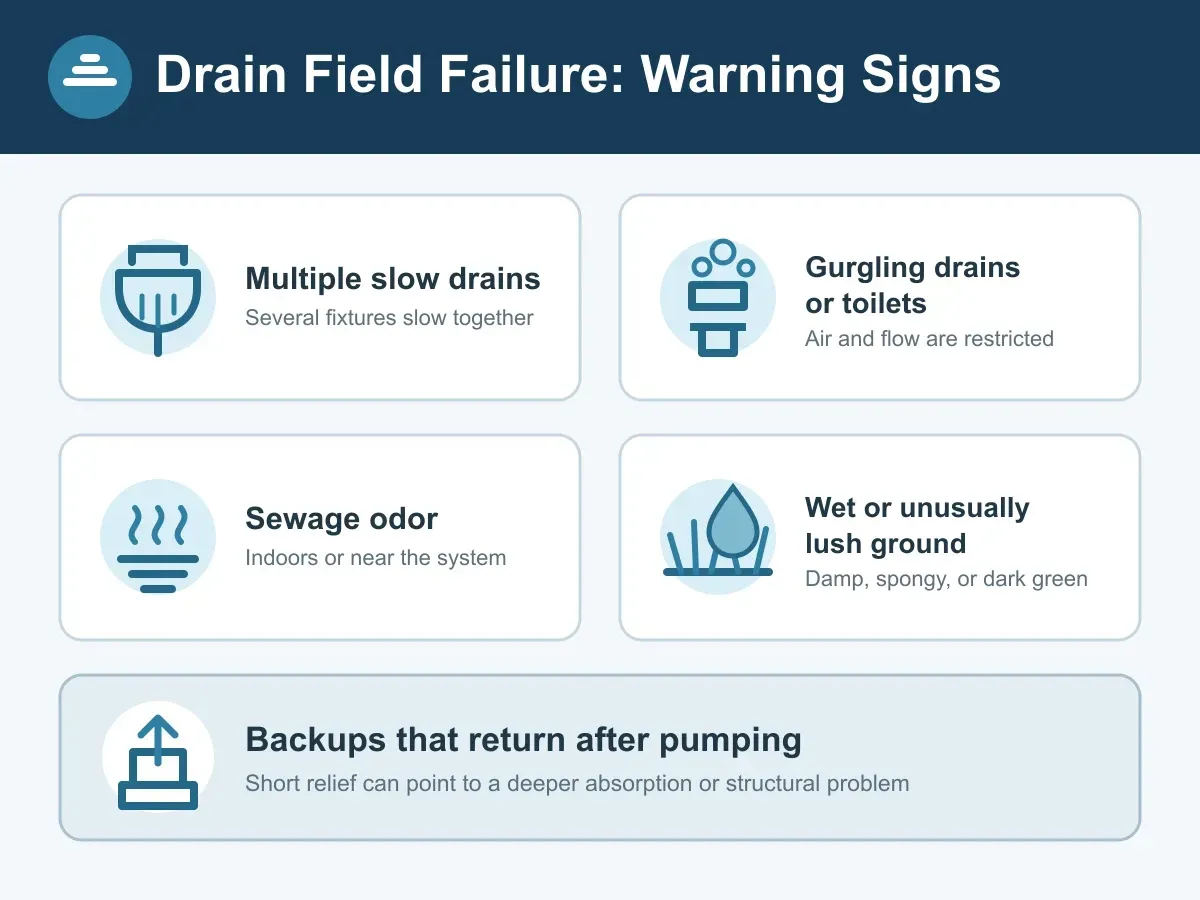
- Multiple slow drains: Several fixtures slowing together points beyond a local clog and toward the main line or onsite system.
- Gurgling drains or toilets: Trapped air can signal a partial blockage, restricted venting, or an overloaded system.
- Sewage odor: Odor may come from a plumbing trap or vent, but it can also accompany a backup or drain field malfunction. See why your basement smells like sewer.
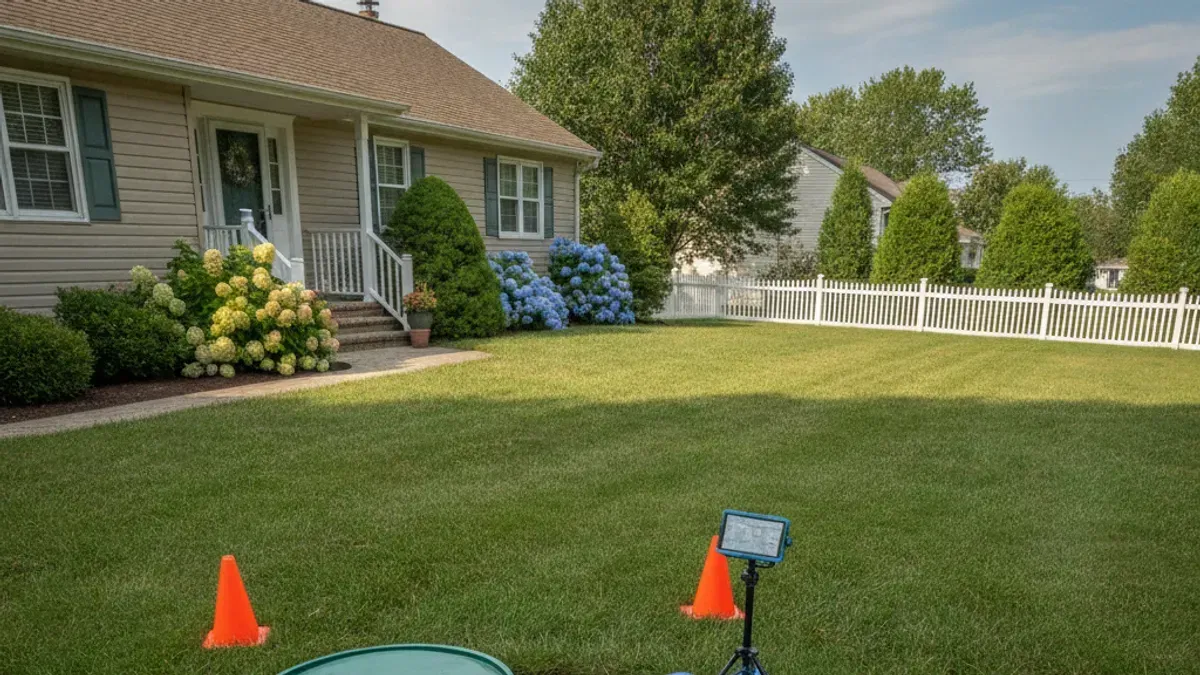
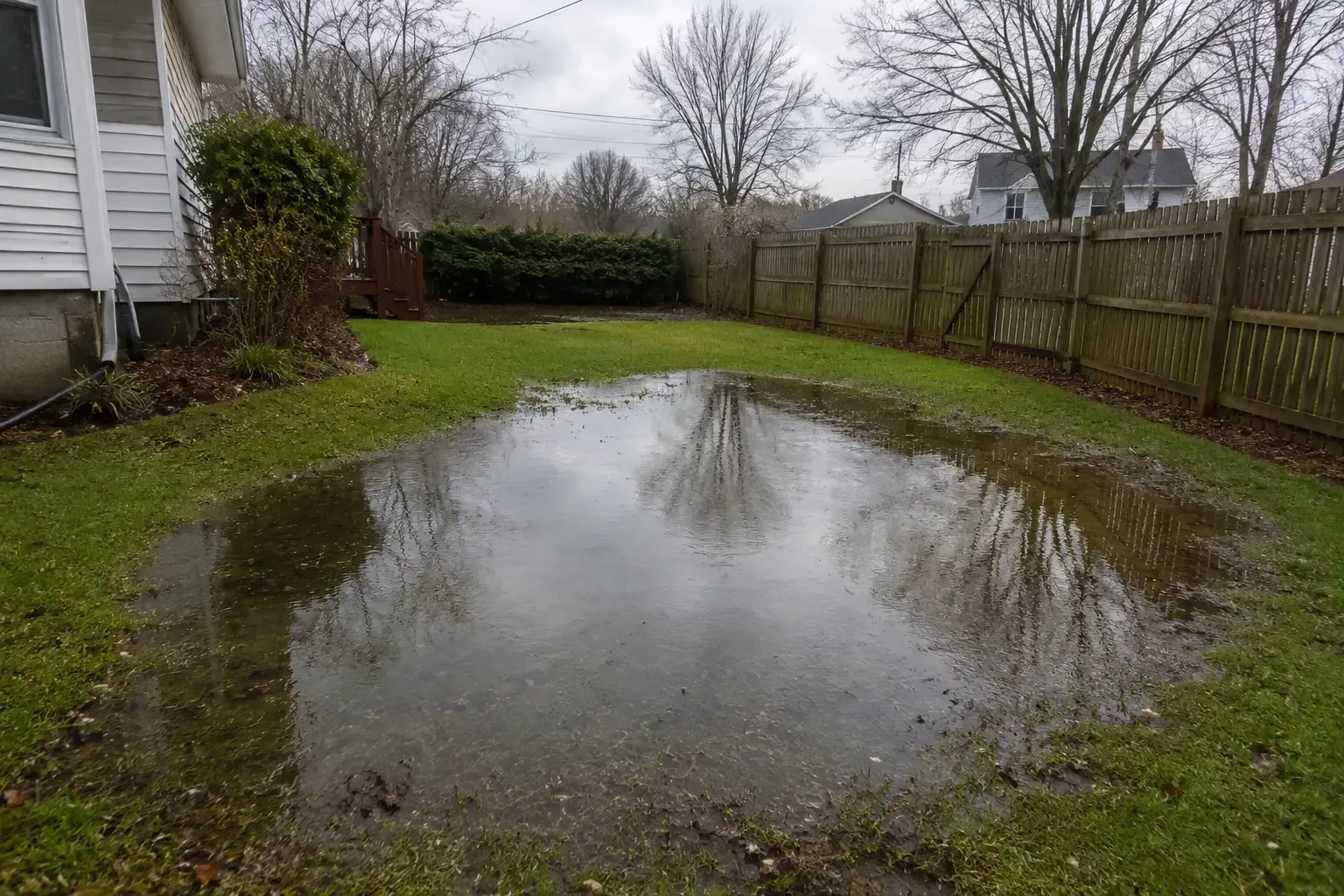
- Wet or unusually lush ground: Spongy soil, damp patches, or a dark green stripe over the leaching area can mean effluent is close to or reaching the surface.
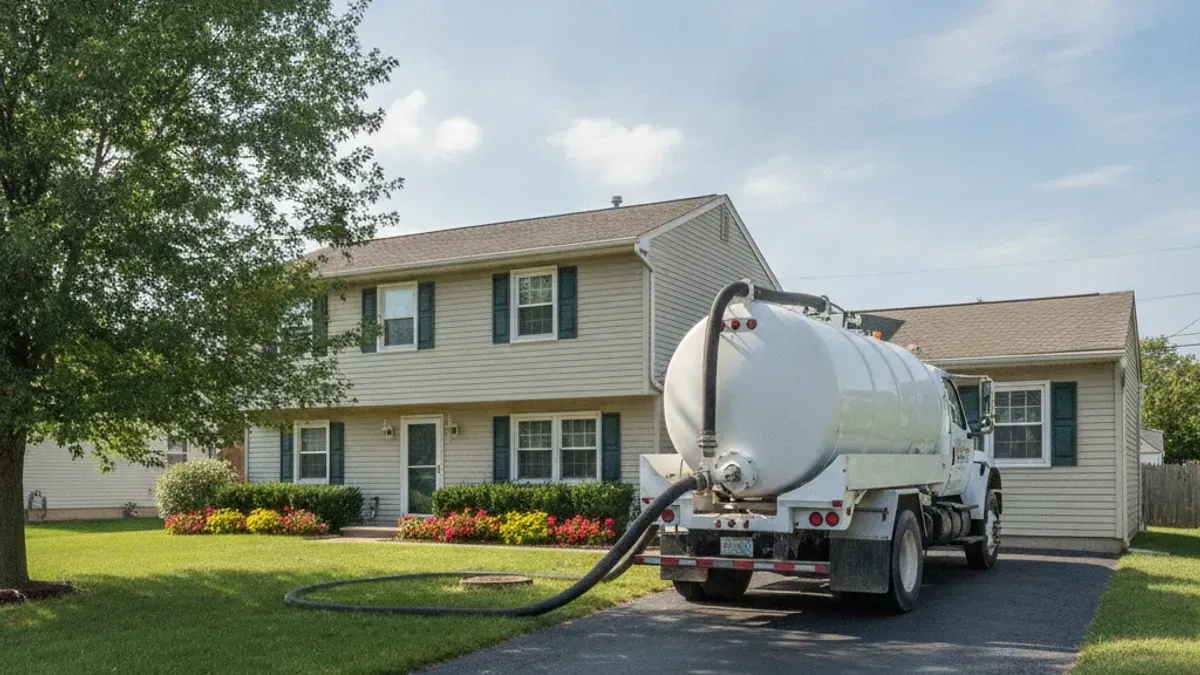
- Backups that return after pumping: Short relief can point to groundwater, a clogged absorption area, structural damage, or a blocked line.
- Much more frequent pumping: A sudden change from the property's normal pattern deserves diagnosis.
These leach field failure signs align with EPA guidance (US EPA). Article 6 defines a failed system to include continued failure to accept wastewater, discharge to a basement or drainage system, surfacing or seeping wastewater, groundwater seepage into components, and structural damage (Suffolk County Sanitary Code Article 6).
Article 6 includes pumping four or more times per year when groundwater infiltration, a collapsed leaching structure, or a clogged absorption area causes it, excluding reasonable scheduled maintenance. Separately, the grant rules classify documented pumping two or more times per year as Failure, Non-Catastrophic. There, Failure, Catastrophic means structural failure such as a collapse that cannot be corrected by pumping and presents an immediate health or safety concern (Article 6; SIP grant rules).
Symptom, likely cause, and what actually fixes it
In brief: We do not price a replacement from symptoms alone because slow drains, odor, gurgling, wet ground, and backups can begin with anything from a local clog to a saturated leaching area; an inspection identifies the failed part and separates routine maintenance from repair or replacement.
| What you are seeing | Most likely cause | What usually fixes it | Cost profile |
|---|---|---|---|
| One slow fixture only | Local fixture or branch-line clog | Professional clearing after confirming the problem is isolated | Routine maintenance |
| Every drain slow at once | Main-line blockage, a full tank, or restricted absorption | Line diagnosis, pumping when due, or component repair | Routine maintenance to moderate repair |
| Gurgling with no backup | Partial line blockage, venting problem, or rising system level | Inspection followed by targeted clearing or service | Routine maintenance to moderate repair |
| Backups returning within weeks of a pump-out | Clogged absorption area, groundwater infiltration, damaged piping, or structural failure | Cause-specific repair or replacement of the failed component | Major repair to replacement |
| Wet ground or lush green stripe over the leaching area | Surfacing effluent, soil saturation, or uneven distribution | Professional assessment, then repair or compliant replacement | Major repair to replacement |
| Sewage odor indoors | Trap or vent issue, a main-line restriction, or a hidden backup | Diagnosis, then repair of the confirmed source | Routine maintenance to moderate repair |
| Sewage odor outdoors only | Normal vent downdraft, obstructed venting, or a malfunctioning disposal area | Odor-source diagnosis and repair if needed | Routine maintenance to moderate repair |
| Soft or sinking ground over the structure | Structural deterioration, a void, or collapse | Keep the area clear and have a licensed contractor secure and replace the failed structure | Replacement |
| Backups that worsen after heavy rain or in spring | Seasonal groundwater rise or a waterlogged absorption area | Reduce household flow while a professional determines whether the condition is temporary or structural | Moderate repair to replacement |
A symptom can have a routine or major cause, which is why we diagnose before quoting. For planning information, compare what cesspool pumping costs with our guide to new system installation cost.
What causes a drain field or cesspool to fail
In brief: We most often separate failure causes into accumulated clogging, solids or grease reaching the absorption area, root or pipe damage, compacted soil, too much water arriving too quickly, structural aging, and Suffolk County groundwater that rises high enough to reduce the soil's ability to accept wastewater.
A normal biomat develops where effluent meets soil and can restrict flow over time. Poor maintenance accelerates clogging when a tank is not pumped and solids, grease, or waste food reach soil pores. Roots can enter piping, while vehicles compact soil or crush components. A burst of household water can also exceed short-term capacity (NC State Extension).
Long Island adds high or seasonally rising groundwater. Suffolk County's hazard plan says rainfall can raise the water table into the leaching area from below, compromise septic systems, and cause backups. A system may act failed after prolonged rain even when household habits did not change (Suffolk County Hazard Mitigation Plan).
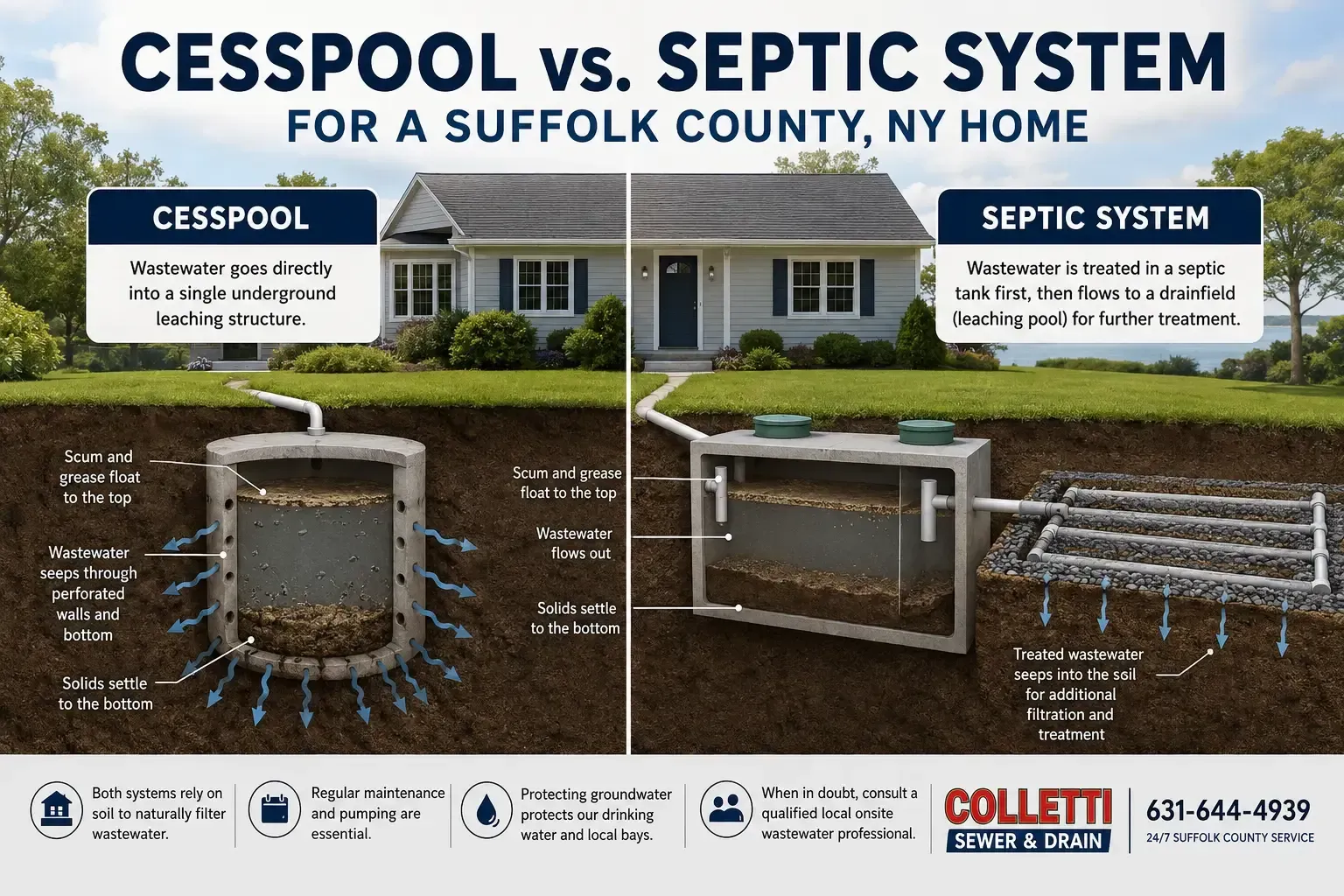
Approximately 74% of Suffolk County residential properties rely on onsite wastewater disposal, and an EPA case study reported that about 252,000 residences built before the septic-tank requirement were assumed to use cesspools alone. It also recorded a county estimate close to a 10% annual hydraulic failure rate, while noting that complaints were much lower and failures may be underreported (Suffolk County wastewater district study hosted by NYS DEC; US EPA health impact assessment).
We serve Babylon, Brookhaven, Huntington, Islip, Smithtown, Riverhead, Southampton, Southold, East Hampton, and Shelter Island. Conditions vary parcel by parcel, so groundwater and system-specific requirements should be confirmed with the Suffolk County Department of Health Services.
Repair or replace? The honest decision
In brief: We recommend repair when testing identifies a correctable blockage, broken line, root intrusion, damaged baffle, overloaded component, or isolated part failure; replacement becomes the honest answer when a leaching structure no longer accepts effluent, structural deterioration is beyond repair, or a cesspool has collapsed.
When repair can be the right answer
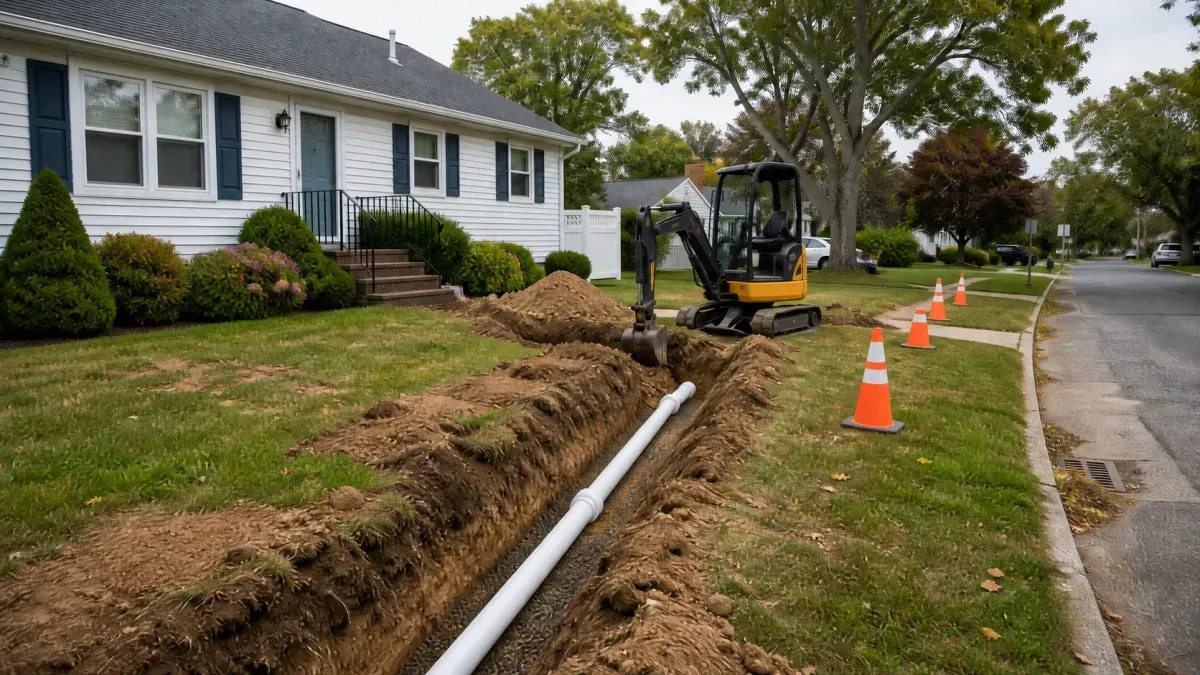
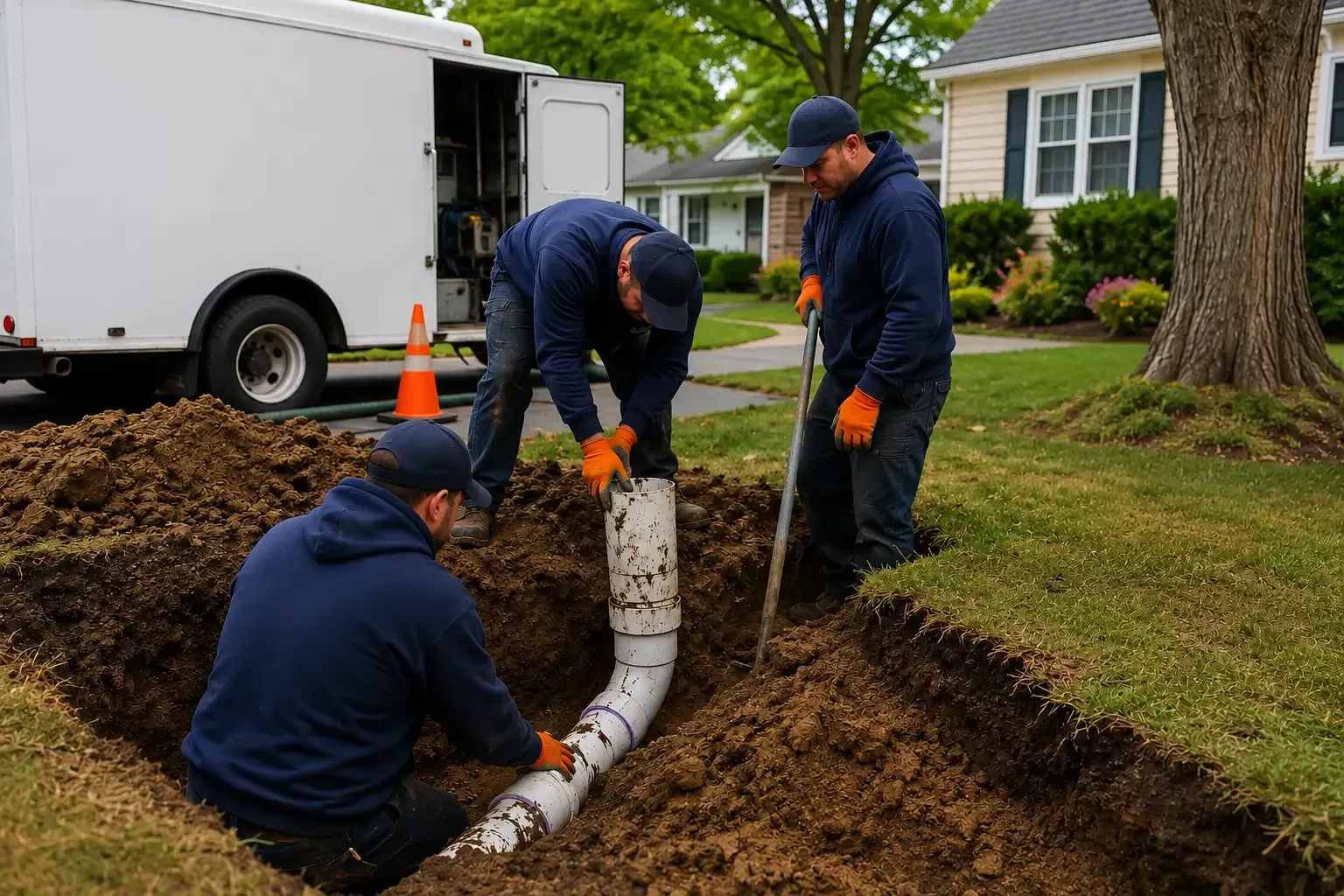
A line can be cleared, damaged piping can be replaced, roots can be addressed, and a baffle or other failed component may be repairable. A short-term hydraulic overload may also improve after water use is reduced and groundwater recedes. None of those findings automatically proves that the entire leaching area must be replaced.
When replacement is justified
If the absorption area no longer accepts effluent, pumping provides only brief relief. A collapsed structure is not a maintenance problem. Before authorizing replacement, ask what was inspected, what failed, whether the building line was ruled out, which approvals apply, and whether the diagnosis will be provided in writing.
Since July 1, 2019, Suffolk County has not allowed an old cesspool to be replaced with another cesspool. A replacement must meet current standards, including at minimum a septic tank before the leaching structure, and Department of Health Services approval is required before an OWTS replacement or retrofit (Suffolk County Department of Health Services). Confirm the exact path for your parcel with the county before work begins.
County and state grant programs may help eligible homeowners upgrade qualifying systems, but eligibility is property-specific (Suffolk County Septic Improvement Program; New York State Environmental Facilities Corporation). Additives marketed as drain field restorers are not a substitute for diagnosis. EPA does not recommend bacterial or chemical septic additives because they can be ineffective or harm system operation and the environment (US EPA).
How to choose an honest Suffolk County cesspool and drain company
In brief: We believe an honest Suffolk County company should answer emergencies around the clock, explain a realistic price range before dispatch, inspect before quoting final work, document what failed, and recommend replacement only when the evidence shows maintenance or a focused repair will not solve the problem.
- Look for 24/7 availability and real Suffolk County onsite-system experience.
- Ask for a clear price range before dispatch and a final scope after inspection.
- Require the diagnosis and recommended work in writing.
- Be cautious with a replacement quote based only on a phone description.
- Reject chemical additives presented as a cure for a failed drain field.
- Choose a company that separates pumping, drain cleaning, repair, and replacement.
At Colletti Sewer & Drain, we diagnose first and quote the work supported by evidence.
Frequently asked questions
In brief: We answer the questions Suffolk County homeowners ask most about early warning signs, cesspool failure, rain-related backups, repairability, service life, additives, and sewage safety, but a site inspection remains the only reliable way to identify which buried component is actually causing a specific symptom.
What are the signs of drain field failure?
We consider several slow drains at once, gurgling toilets or drains, sewage odor, wet or unusually green ground over the leaching area, and backups that return soon after pumping the clearest signs that a drain field or another major onsite-system component needs professional diagnosis.
What are the first leach field failure signs to look for?
We usually see the earliest leach field failure signs as a pattern of slower drainage across several fixtures, intermittent gurgling, outdoor odor, or a damp and unusually lush patch over the disposal area, especially when these changes appear together or worsen after water-heavy days.
How do I know if my cesspool is failing?
We suspect a failing cesspool when whole-house drainage slows, wastewater backs up, pumping provides only short relief, groundwater enters the structure, sewage surfaces, or the ground sinks, but the county definition and the correct remedy depend on what a licensed inspection finds.
Can a failed drain field be repaired, or does it have to be replaced?
We can often repair a blockage, broken line, root-damaged section, baffle, distribution component, or overload problem, but a disposal area that no longer accepts effluent or a structurally collapsed cesspool usually requires a compliant replacement approved through the applicable Suffolk County process.
Why does my septic system back up after heavy rain?
We often find that prolonged rain has saturated the soil or raised Suffolk County groundwater around the leaching area, reducing its capacity to accept household wastewater, although a clog, groundwater leak into a component, or already weakened absorption area can produce the same rain-related pattern.
How long does a drain field last?
We cannot give every drain field one reliable lifespan because soil, groundwater, design, household flow, solids control, roots, compaction, and maintenance history all affect performance, so condition and service records are more useful than age alone when deciding whether a specific system needs repair or replacement.
Do septic tank additives fix a failing drain field?
We do not treat bacterial or chemical additives as a drain field repair because EPA says these products are not recommended for domestic wastewater systems and may be ineffective or harmful, while a blockage, structural defect, saturated soil, or exhausted absorption area still requires an actual diagnosis.
Is a sewage backup in the house dangerous?
We treat a sewage backup as a health hazard because wastewater can contain disease-causing organisms, so stop using water, avoid contact, keep children and pets away, do not open or enter the onsite system, and call a qualified service provider to stop the source safely.
Get your system diagnosed before it fails completely
In brief: We provide 24/7 service across Suffolk County, inspect before recommending work, and give homeowners a clear explanation of whether the problem is routine pumping, a clogged or damaged line, a repairable component, groundwater overload, or a system that genuinely needs replacement.
Call Colletti Sewer & Drain at 631-644-4939 or get a same-day Suffolk County diagnosis. Your on-site inspection is free, and we will not push replacement before diagnosing the cause.