Restaurant Grease Trap Cleaning Schedule in Suffolk County: What the Health Department Actually Requires
Compliance Quick Reference
Suffolk County restaurants, delis, pizzerias, diners, cafés, bakeries, catering halls, and commercial kitchens need a grease trap cleaning schedule that is based on real grease buildup, not guesswork.
Quick rules to know:
- Pump before grease and solids reach 25% of trap depth.
- Most kitchens land on a 30, 60, or 90-day cleaning cycle.
- The hauler must have the right Suffolk County liquid waste license and grease trap endorsement.
- Keep every manifest and service record. Inspectors can ask for proof.
- Full pump-out is the standard. Do not accept partial service or decanting.
- Yellow grease from fryer oil and grease trap waste are different waste streams and require different endorsements.
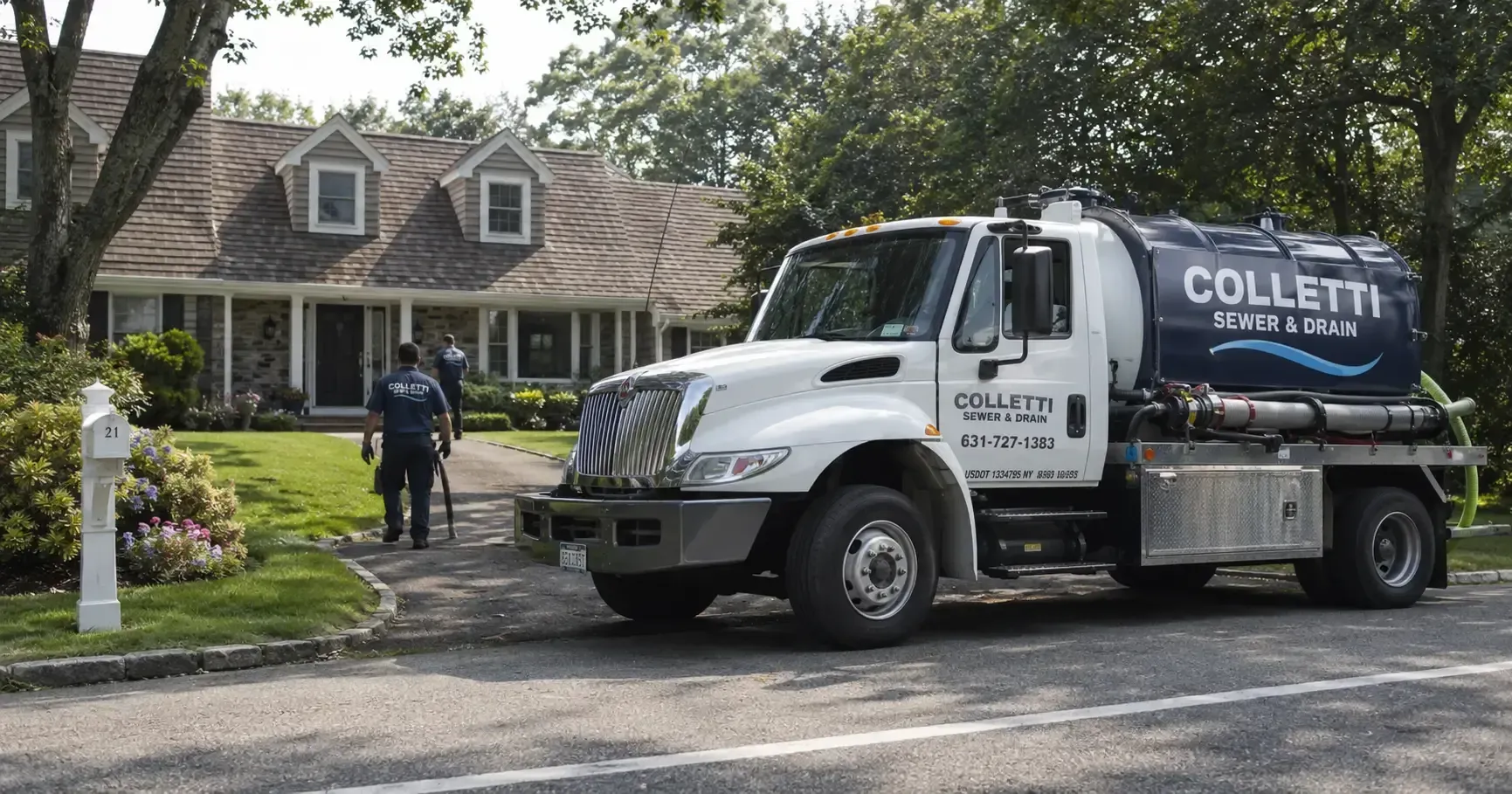
Colletti Sewer & Drain provides grease trap cleaning service for Suffolk County restaurants, digital manifests, and scheduled service across Coram, Patchogue, Medford, Ronkonkoma, Selden, Centereach, Smithtown, Huntington, Babylon, Bay Shore, Hauppauge, Port Jefferson, Riverhead, Stony Brook, and Bohemia.
Call 631-644-4939 or request a free grease audit.
Why Grease Trap Compliance Matters Right Now
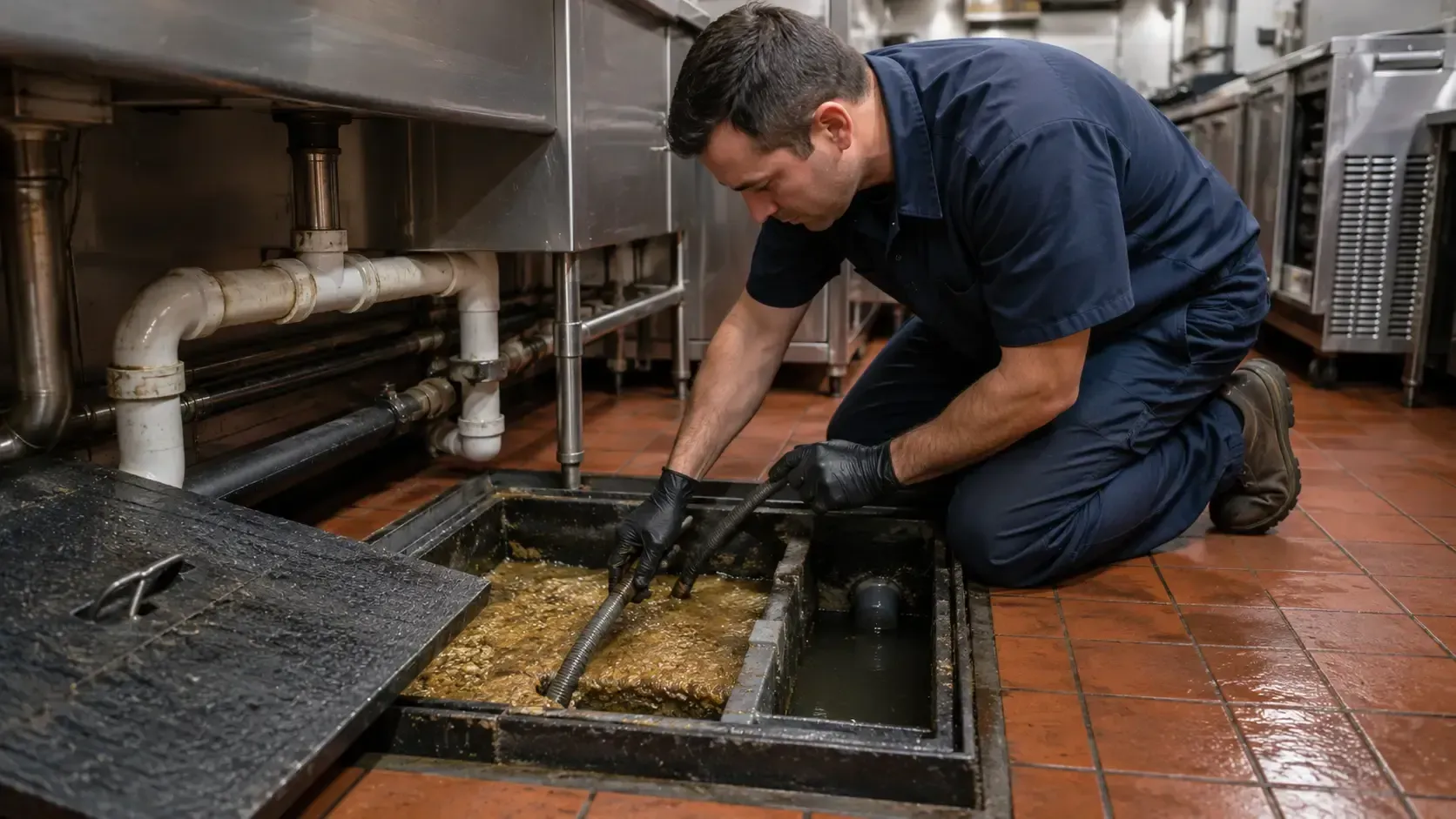
A grease trap backup during dinner service is not a small maintenance problem. It can shut down sinks, flood a prep area, force an emergency cleanout, trigger a health inspection issue, and damage your Google and Yelp reputation before the physical mess is even gone.
Suffolk County restaurants operate under several overlapping rules. Suffolk County Sanitary Code Article 13 governs food establishments and requires sewage and liquid waste to be disposed of through an approved public sewer or properly sized and maintained sewage disposal system. Article 6 governs wastewater systems and defines kitchen and gray water loads for commercial uses. Article 7 deals with pollution control and regulated discharges. Suffolk County also uses Chapter 563 liquid waste licensing rules for the companies that pump, haul, and dispose of grease trap waste. (Suffolk County Government)
That matters because many Long Island commercial properties are not simple city-sewer buildings. A restaurant in Coram, Medford, Selden, Ridge, or Port Jefferson may discharge to a private septic or cesspool system. A restaurant in Brookhaven, Smithtown, Huntington, Riverhead, Babylon, or Bay Shore may deal with a sewer district, a town requirement, SCDHS review, or a mix of all three.
The short version: grease trap cleaning in Suffolk County is not just a housekeeping task. It is part of your food permit, wastewater compliance, plumbing protection, and risk control plan.
Which Suffolk County Businesses Are Required to Have a Grease Trap?
Suffolk County Department of Health Services guidance says an outside grease trap is required for subsurface sewage disposal systems whenever food is prepared for commercial purposes or where cooking implements or dishes are cleaned or sanitized. The guidance also says an inside grease trap is not a substitute for that outside-trap requirement when the property is on a subsurface sewage disposal system. For community sewer systems, the appropriate sewer authority decides the grease trap requirement. (Suffolk County Government)
That covers a wide range of food businesses, including:
| Business Type | Why Grease Trap Review Matters |
|---|---|
| Full-service restaurants and bistros | Dishwashing, prep sinks, sauces, oils, proteins |
| Pizzerias and Italian delis | Cheese, oil, meat toppings, fryer use |
| Diners and breakfast spots | Bacon grease, sausage grease, eggs, long service hours |
| Quick-service and fast-casual restaurants | High ticket volume and repeated wash cycles |
| Bakeries and donut shops | Fryer oil, butter, glazes, washdown |
| Bars and taverns serving food | Wings, fryer baskets, sauces, late-night cleaning |
| Coffee shops with food prep | Small traps can fill faster than owners expect |
| Institutional kitchens | Schools, nursing homes, hospitals, cafeterias |
| Catering halls and banquet venues | Event spikes create high FOG loads |
| Food trucks and mobile vendors | Commissary and disposal rules still matter |
| Hotels with kitchens | Multiple fixtures and irregular volume |
| Country clubs and golf course restaurants | Seasonal peaks and banquet events |
Older delis and pizzerias may have under-sink internal traps in the 20 to 50-gallon range. Larger or newer establishments often need outside gravity interceptors. New York State’s Code Outreach Program explains that hydromechanical grease interceptors are commonly found under sinks or near appliances, while gravity grease interceptors are commonly required by local sewer districts and are usually outside with capacities greater than 300 gallons.
A change of use, kitchen expansion, new build, renovation, or failed sanitary system can trigger SCDHS review. Suffolk County guidance says the Department reviews new, expanded, or failed existing sewage disposal systems for properties other than single-family residences. (Suffolk County Government)
How Often Do You Have to Pump? The 25% Rule Explained
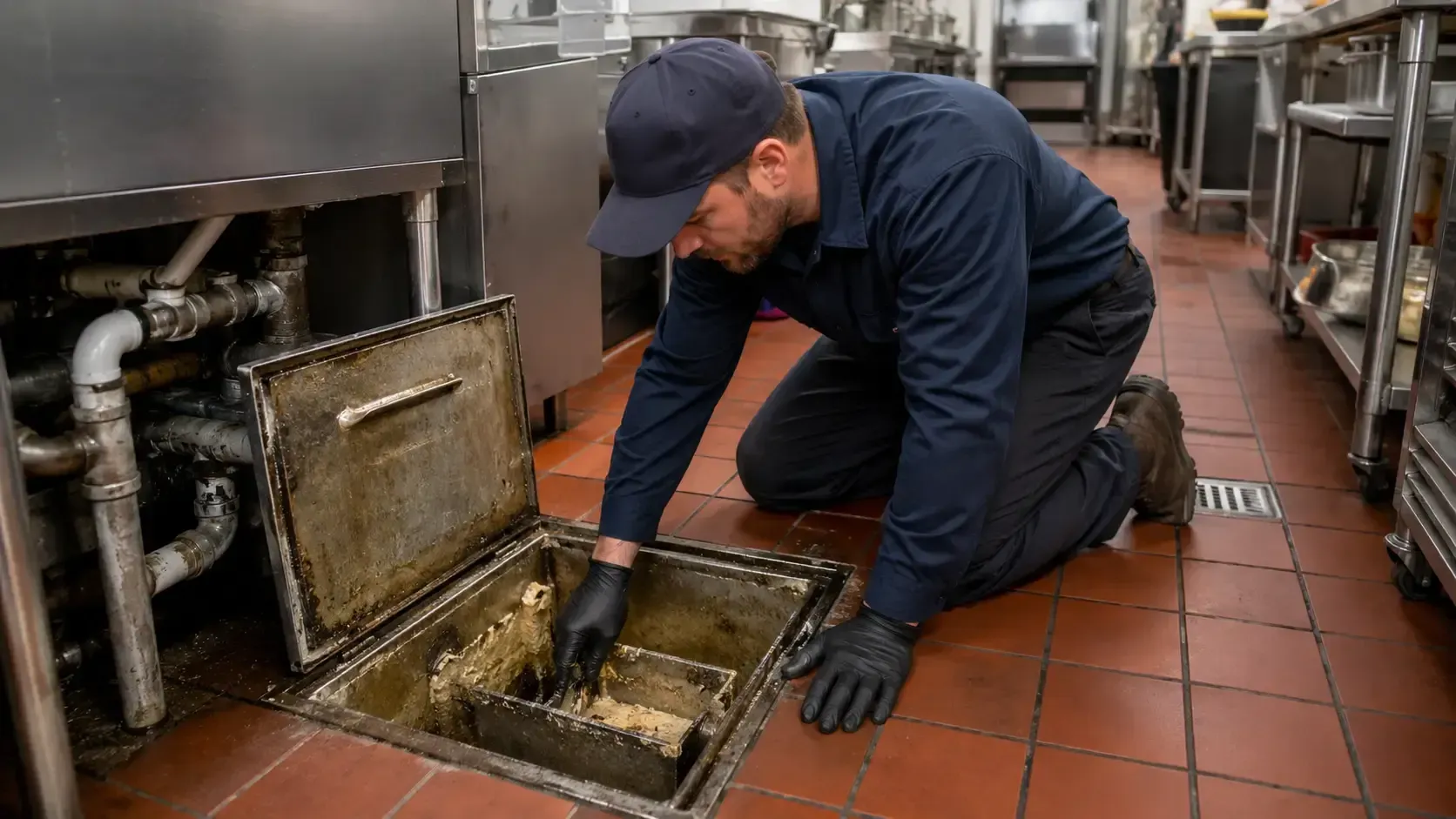
The best restaurant grease trap cleaning schedule is based on measurement. The calendar matters, but the grease level matters more.
The standard rule is the 25% rule. Once floating grease plus settled solids take up about 25% of the trap’s operating depth, the trap loses separation space. Incoming hot wastewater pushes fats, oils, grease, and solids through the outlet instead of letting them separate. EPA pretreatment permit language uses the same concept for in-ground grease traps, saying they should be completely emptied when 25% of the operating depth is occupied by fats, oils, grease, and settled solids, or as required by the local POTW authority. (US EPA)
Brookhaven’s sewer use ordinance is even more direct for covered food establishments in its district. It requires grease traps to be inspected monthly and cleaned before grease exceeds 25% of grease capacity, or once every three months for external grease traps, whichever comes first. It also requires written logs of inspections, cleaning, and pumpings to be filed with the District every 90 days. (brookhavenny.gov)
In practice, most Suffolk County restaurants fall into one of these cycles:
| Establishment Type | Typical Pump Interval | Why |
|---|---|---|
| Pizzeria or Italian deli | 30 to 60 days | High oil, cheese, sauce, and meat load |
| Diner or breakfast spot | 30 to 45 days | Bacon, sausage, eggs, fryer use, long hours |
| Fried chicken or fish and chips | 30 days | Heavy fryer output and fast FOG buildup |
| Full-service restaurant | 60 to 90 days | Mixed menu and moderate FOG volume |
| Coffee shop with light food prep | 90 days | Lower FOG, but smaller traps still need checks |
| Bakery with fryers | 30 to 60 days | Donuts, pastry frying, butter-heavy prep |
| Bar or tavern with kitchen | 60 to 90 days | Wings and fried menu items shorten the cycle |
| Institutional kitchen | 60 to 90 days | Larger interceptor and steadier volume |
| Catering hall or banquet venue | 60 to 90 days | Event-driven, pump after large events when needed |
The key is measurement. A licensed hauler should measure FOG and solids at each visit and adjust the schedule. If your hauler never measures the trap, they are guessing.
Most Suffolk County restaurants find their right rhythm after the first 90 days of measured service. Colletti adjusts 30, 60, and 90-day schedules based on what is actually pumped out, not a generic calendar.
Why Your Hauler Needs a Suffolk County License
Grease trap pumping Long Island service is regulated because grease trap waste is not ordinary trash. It has to be pumped, hauled, documented, and disposed of properly.
Suffolk County’s liquid waste license application lists endorsements under Suffolk County Law Chapter 563-79.C. It specifically separates Grease Trap/Grease Interceptor Cleaning and Maintenance from Yellow Grease/Fryer Oil Collection. The grease trap endorsement requires proof of a pump or vacuum truck dedicated to trap grease waste, along with required training. Yellow grease requires a separate vehicle endorsement for fryer oil collection.
That distinction matters. Grease trap waste, sometimes called trap grease or brown grease, is mixed with wastewater and solids. Yellow grease is used fryer oil that is stored separately for recycling or disposal. A company set up only for fryer oil pickup is not automatically qualified to pump grease trap waste.
Suffolk County Sanitary Code Article 6 also says contractors or developers holding an active Liquid Waste License under Chapter 563, Article VII must report all pumping of septic tanks, I/A OWTS, cesspools, grease traps, and leaching structures to the Department in accordance with Department standards. (Suffolk County Government)
For a restaurant owner, the practical meaning is simple: if there is no licensed hauler record and no manifest, you may have a compliance gap. Ask for the hauler’s license number and grease trap endorsement on the first call. A serious commercial provider should be willing to give it.
Manifest Records: What to Keep and How Long
Every grease trap pump-out should produce a manifest or service record. That document should show the service date, location, volume removed, hauler information, disposal information, and signatures or confirmation of completion.
Do not rely on memory. Do not rely on a text message that says “done.” Keep records where your manager can find them during an inspection.
Suffolk County’s Food Protection Program says food establishments are inspected for compliance with food storage, plumbing, sewage disposal, sanitation, and required equipment functionality. Operators are cited for violations of Suffolk County and New York State sanitary codes and New York State Public Health Law when violations are found. (Suffolk County Government)
For Brookhaven sewer district users, the ordinance requires written logs of inspections, cleaning, and pumpings to be filed every 90 days. It also says records tied to purchasing, storage, and removal of grease and related waste must be retained on premises for at least two years. (brookhavenny.gov)
Best practice for any Suffolk County restaurant is to keep:
- A paper binder in the kitchen office.
- A digital folder with PDFs of every manifest.
- At least 24 months of records.
- A simple one-page schedule showing the next service date.
- Contact details for the hauler and disposal company.
Colletti provides digital manifests after service so owners and managers are not chasing paperwork before an inspection.
What Happens If You Are Not Compliant?
The consequences depend on the agency, location, sewer setup, violation history, and severity. But the pattern is clear: missed grease trap maintenance costs more than scheduled service.
Suffolk County Food Protection says food establishments must close when an imminent health hazard exists. The county lists sewage in food storage, food processing, or public areas as one condition requiring closure until the hazard no longer exists. (Suffolk County Government)
Brookhaven’s sewer ordinance gives the town power to issue notices of violation, require corrective plans, treat each day or condition as a separate offense, pump out a grease trap after a violation, charge the violator for the pump-out, and assess a mandatory processing fine. (brookhavenny.gov)
A grease backup can also create real business costs:
| Problem | Typical Business Impact |
|---|---|
| Emergency jetting | Often $500 to $1,500 depending on timing and severity |
| Missed dinner shift | $3,000 to $8,000 in lost revenue for a busy local restaurant |
| Spoiled inventory | $500 to $2,000 depending on walk-in and prep loss |
| Staff downtime | Paid labor with no service revenue |
| Reviews and reputation | “Sewage smell” or “closed kitchen” reviews stay online |
| Insurance questions | Missing maintenance records weaken your position |
This is why scheduled, documented grease trap pumping is the cheapest insurance in a Suffolk County commercial kitchen.
Worried about a missed manifest or an upcoming inspection? Colletti’s free grease audit reviews your current schedule, hauler paperwork, and manifest history.
No commitment. Call 631-644-4939 or request a free review.
What Does Grease Trap Cleaning Cost in Suffolk County?
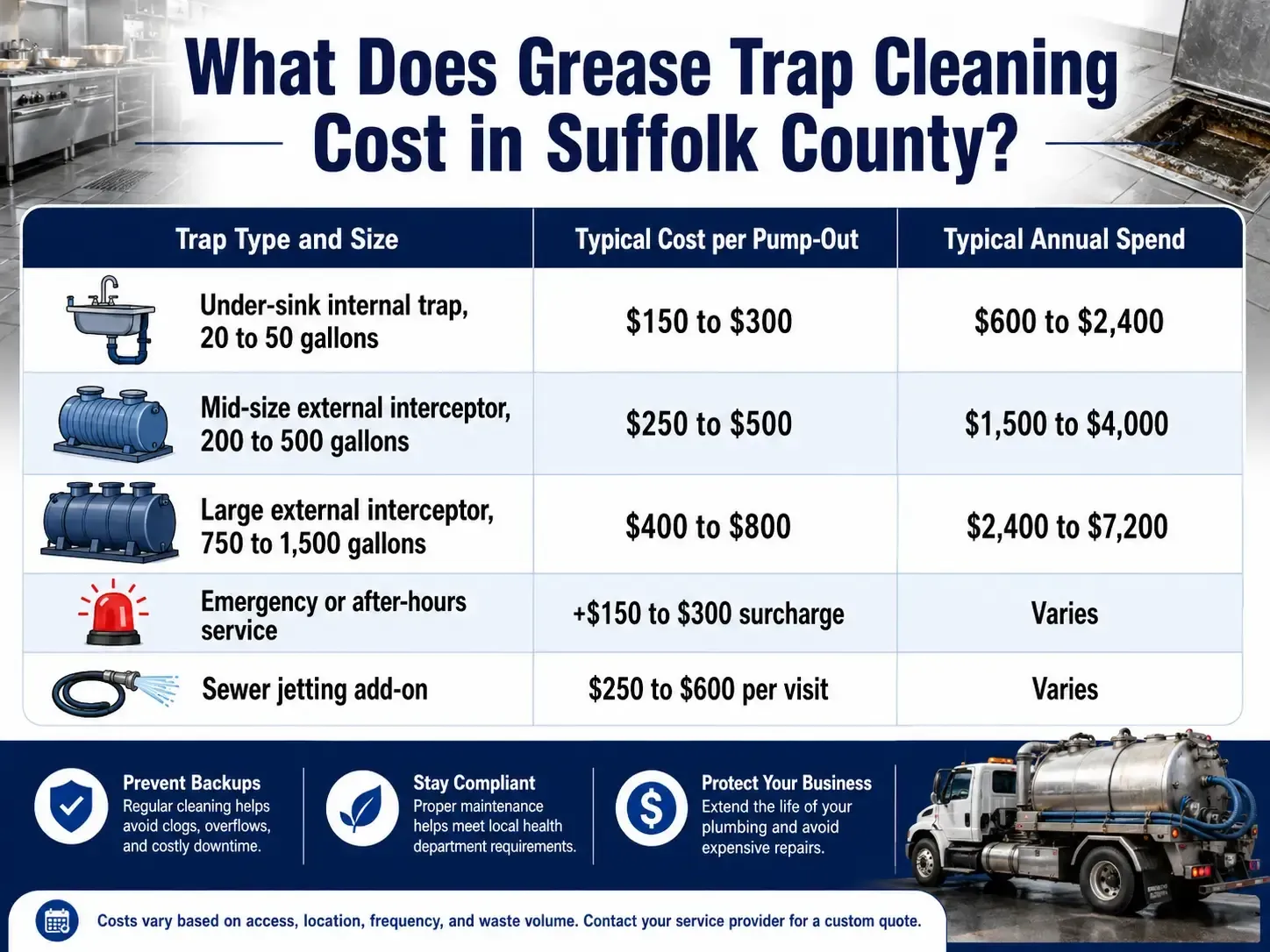
Restaurant owners need real numbers, not vague “call for pricing” language. Actual pricing depends on size, access, volume, frequency, distance, service time, and whether the work is scheduled or urgent.
Use these ranges as planning numbers:
| Trap Type and Size | Typical Cost per Pump-Out | Typical Annual Spend |
|---|---|---|
| Under-sink internal trap, 20 to 50 gallons | $150 to $300 | $600 to $2,400 |
| Mid-size external interceptor, 200 to 500 gallons | $250 to $500 | $1,500 to $4,000 |
| Large external interceptor, 750 to 1,500 gallons | $400 to $800 | $2,400 to $7,200 |
| Emergency or after-hours service | +$150 to $300 surcharge | Varies |
| Sewer jetting add-on | $250 to $600 per visit | Varies |
Several factors change the final number:
- Trap size: A 50-gallon under-sink trap is not the same job as a 1,500-gallon outside interceptor.
- Access: Basement traps, blocked covers, parking lot access, and heavy lids add time.
- Distance to disposal: Disposal location affects hauler cost.
- Service time: After-hours and emergency calls cost more.
- Schedule: Contracted 30, 60, or 90-day service usually costs less than one-off emergency pumping.
- Add-ons: Sewer jetting, line clearing, or camera work adds cost.
Most restaurant owners save money by scheduling service before the trap fails. Extremely low quotes should raise questions. Ask whether the hauler is licensed, whether the pump-out is complete, whether manifests are included, and whether the service is reported properly.
How to Choose a Grease Trap Service Provider on Long Island
Use this checklist before hiring a grease trap hauler:
- Ask for the Suffolk County liquid waste license number.
The provider should have the proper grease trap cleaning endorsement. - Ask whether yellow grease pickup is separate.
Fryer oil and grease trap waste are not the same stream under Suffolk County’s endorsement list. - Require FOG and solids measurement.
The cleaning schedule should be based on trap depth, not guesswork. - Require full pump-out.
EPA pretreatment language calls for grease traps and interceptors to be completely emptied when the 25% threshold is reached or when the local authority requires it. (US EPA) - Get written manifests.
Keep paper and digital copies. - Confirm reporting and recordkeeping.
Suffolk County requires licensed liquid waste contractors to report grease trap pumping to the Department. (Suffolk County Government) - Set a 30, 60, or 90-day contract.
Your schedule should change if measurements show the trap is filling faster. - Make sure emergency service is available.
Grease backups do not wait for Monday morning. - Choose a Suffolk County company.
A provider based 90 minutes away is not useful when your kitchen line is backing up at 7 p.m. - Pick one company that handles the full system.
Many Suffolk restaurants need grease trap service, drain cleaning, sewer jetting, and septic or cesspool support at different times of the year.
Colletti can support sewer jetting for clogged grease lines, commercial sewer service, 24/7 emergency cesspool and drain service, and a scheduled septic maintenance plan when the kitchen waste system connects to private onsite disposal.
Why Suffolk County Restaurants Work With Colletti
Colletti Sewer & Drain is Coram-based and serves commercial kitchens across Suffolk County, including Patchogue, Medford, Ronkonkoma, Selden, Centereach, Smithtown, Huntington, Babylon, Bay Shore, Hauppauge, Port Jefferson, Riverhead, Stony Brook, and Bohemia.
Restaurants call Colletti because grease trap problems rarely stop at the trap. A slow sink can be a trap issue. A floor drain backup can be a grease line issue. A strong odor can be a sewer line, drywell, or cesspool issue. One vendor that understands grease traps, sewer lines, drains, and cesspools makes life easier for the owner and GM.
Colletti provides:
- Licensed and insured commercial service.
- Suffolk County grease trap cleaning support.
- Digital manifests after service.
- Full pump-out, no decanting.
- 30, 60, and 90-day scheduled contracts.
- Schedule adjustments based on what is actually pumped.
- 24/7 emergency availability for backups and line clogs.
- One phone number for grease trap, drain, sewer, and cesspool service.
Whether you are opening a new spot in Patchogue or your hauler in Hauppauge stopped returning calls, Colletti can walk your kitchen, review your manifest history, and put you on a clean compliance schedule. The grease audit is free.
Call 631-644-4939 or Contact Us today.
Frequently Asked Questions
How often does a restaurant in Suffolk County have to pump its grease trap?
Pump before FOG and solids reach 25% of trap depth. In practice, most restaurants need service every 30 to 90 days. Pizzerias, diners, and fryer-heavy kitchens usually need 30-day or 60-day service. Coffee shops and lower-volume kitchens may reach 90 days.
What is the 25% rule for grease traps?
The 25% rule means floating grease plus settled solids should not occupy more than 25% of the trap’s operating depth. Once that happens, the trap stops separating effectively and grease passes into the sewer, septic system, or drain line.
Do I need a licensed hauler in Suffolk County?
Yes. Suffolk County’s liquid waste license materials list grease trap cleaning as a specific endorsement under Chapter 563-79.C. Yellow grease and trap grease are separate endorsements, so ask your hauler which license and endorsement they hold.
Can I clean my own grease trap?
Staff can scrape plates, dry-wipe pans, and skim small accessible buildup between professional services. Full pump-out, transport, disposal, manifesting, and reporting should be handled by a properly licensed liquid waste hauler.
How much does grease trap cleaning cost in Suffolk County?
Small internal traps often run $150 to $300 per visit. Mid-size external interceptors often run $250 to $500. Large in-ground systems may run $400 to $800. Emergency service, access problems, and sewer jetting can add cost.
How long do I need to keep grease trap manifests?
Keep at least 24 months. Brookhaven’s sewer ordinance requires grease-related records to be retained on premises for at least two years for covered food establishments in its district. Paper and digital copies are best.
What happens if I miss a pump-out?
You risk backups, odors, slow drains, emergency jetting, missed service, citations, sewer district action, and missing manifest issues. If sewage affects a food area, Suffolk County says food establishments must close until the imminent health hazard is corrected.
Does Suffolk County require a specific size grease trap?
Sizing depends on kitchen use, drainage fixture units, projected wastewater flow, property setup, and SCDHS or sewer authority review. Suffolk County guidance says outside grease traps are required for subsurface systems when commercial food is prepared or dishes are cleaned.
Request a Free Grease Audit
If you run a restaurant, deli, pizzeria, diner, bakery, café, catering hall, food truck, or commercial kitchen in Suffolk County, your grease trap schedule should be written down, measured, and documented.
Colletti Sewer & Drain can review your current service interval, check whether your manifest history is complete, and recommend a 30, 60, or 90-day cleaning schedule based on your kitchen volume.
Call 631-644-4939 or request a Free Grease Audit + Compliance Review today.